
Need Help?
Our engineers can confirm the specification, voltage and shipping cost for your market.
Send InquiryShore Durometer
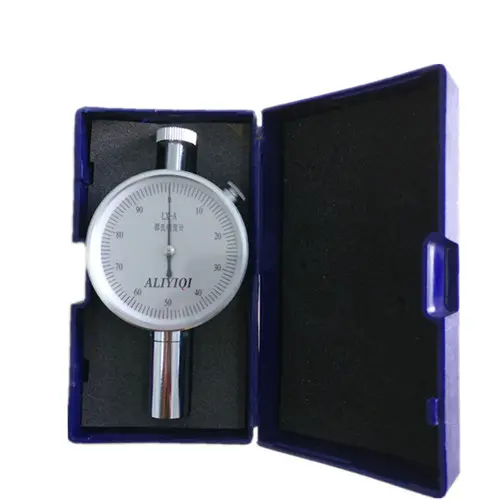
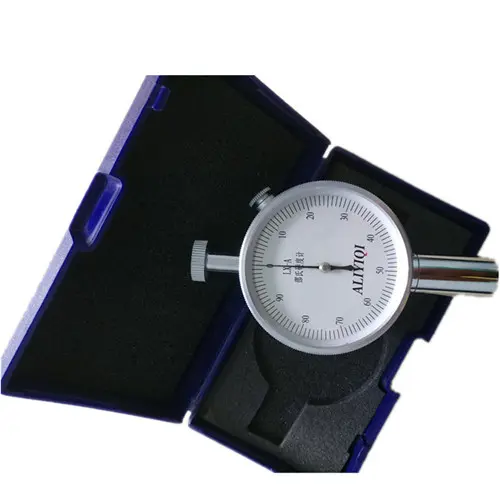
Shore Durometer for Material Hardness Testing
A Shore durometer is an instrument used to measure the hardness of a material by assessing its resistance to indentation. It is generally used with polymers, elastomers and rubbers, and can also be applied to materials such as synthetic rubber, soft rubber, polyester, and leather wax. The result provides a practical way to assess how a material responds when a probe applies pressure to its surface.
On the Shore scale, a higher number indicates greater resistance to indentation and therefore a harder material. A lower number indicates less resistance and a softer material. This simple relationship makes the durometer useful for comparing material hardness during inspection, product evaluation, and routine quality checks. It gives users a direct reading to consider alongside the material and the requirements of its intended application.
Hardness measurement is valuable when material feel alone is not enough to support a consistent assessment. A durometer helps provide an observable reading that can be recorded and compared, supporting clearer communication between operators, production teams, and material suppliers. Results are most useful when measurements are taken and interpreted consistently for the material being assessed.
Construction and Operating Features
The probe is made from alloy material and is described as waterproof and anti-rust. Its durable construction is intended for regular measurement work, while the precision design of the internal structure supports stable hardness readings. Together, these features make the instrument suitable for users who need a straightforward tool for checking the relative hardness of applicable materials.
- Alloy probe construction provides a durable contact point for indentation measurements.
- A precision internal structure is designed to support stable and accurate hardness measurement.
- The mechanical dial responds quickly and has a clear scale for direct, convenient reading.
- A large spring design helps ensure accurate measurement.
- The non-slip edge supports handling, and the dial can be rotated for calibration.
- A metal button allows the dial to be adjusted and fixed for convenient, quick operation.
The mechanical dial keeps the result visible at the instrument, allowing an operator to read the scale directly without needing to interpret a separate display. The adjustable dial design also gives users a means to set and secure the dial as needed. These structural details support a practical workflow for routine checks where a clear reading and convenient handling matter.
Suitable Materials and Applications
This Shore durometer is generally suitable for rubber, synthetic rubber, soft rubber, polyester, and leather wax. These material categories can have different levels of firmness, so checking hardness can help users understand how a sample responds to indentation and distinguish softer materials from those offering greater resistance. The resulting reading can support material review and comparison without replacing other checks that may be needed for a finished product.
In a production or inspection setting, the instrument can be used to assess incoming material, review samples during processing, or check finished items where hardness is relevant. It may also help teams compare samples when evaluating a material choice for a particular use. Because hardness can influence how a material feels and performs in an application, a direct reading can be a useful part of a broader inspection process.
For useful comparisons, consider the reading together with the material type and the conditions of the assessment. Applying a consistent approach across samples helps make recorded observations easier to review and discuss. The durometer is intended for the listed material types; select the appropriate testing approach for the material and the purpose of the evaluation.
Practical Use, Handling, and Care
For routine use, identify the sample to be assessed and make sure the area being tested is appropriate for a hardness check. Keep the measuring approach consistent when comparing samples, and read the mechanical dial clearly after taking a measurement. A steady, repeatable process makes it easier to record results and identify differences between materials or production samples. Follow any applicable procedures established for the material under evaluation.
The non-slip edge and rotary dial design support handling and adjustment during measurement work. The dial’s metal adjustment button can be used to set and fix its tightness, while the rotary calibration feature provides a convenient way to adjust the dial. These features help keep routine operation direct and accessible for users who need to make repeated checks as part of inspection or material review.
As with any measuring instrument, handle the probe and dial carefully, and keep the instrument clean and protected between uses. Check that the scale is legible and that the dial responds as expected before relying on a reading. Store the durometer in a manner that helps protect its measuring components from damage. Appropriate handling and consistent application help preserve the instrument’s usefulness and support dependable day-to-day hardness assessment.
With its alloy probe, precision internal structure, clear mechanical dial, large spring design, and adjustable dial, the Shore durometer offers a practical approach to checking material hardness. Its application to rubber and other listed materials makes it useful for comparison and routine evaluation wherever resistance to indentation is an important consideration.