
Need Help?
Our engineers can confirm the specification, voltage and shipping cost for your market.
Send InquiryJm St 1 Stretcher
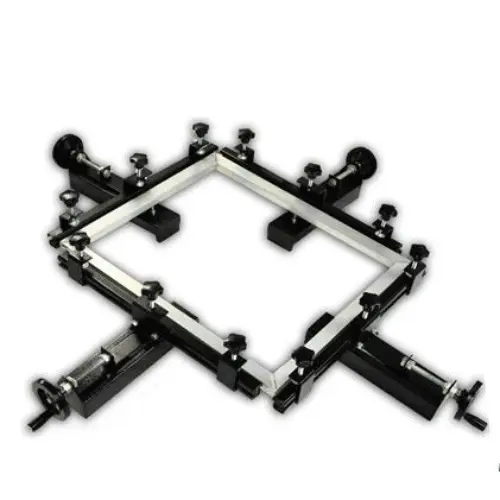
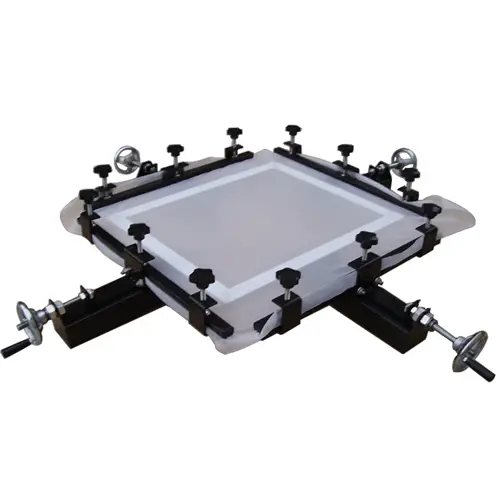
Screen Printing Small Stretcher Machine Overview
The Screen Printing Small Stretcher Machine, model JM-TR-1, is a screen stretching appliance for preparing frames used in screen printing. Screen stretching is an important part of screen preparation: the stretching tool and technique influence the quality of emulsion coating, screen stretching, and screen printing. This machine provides a practical way to hold a frame and apply stretching force during preparation.
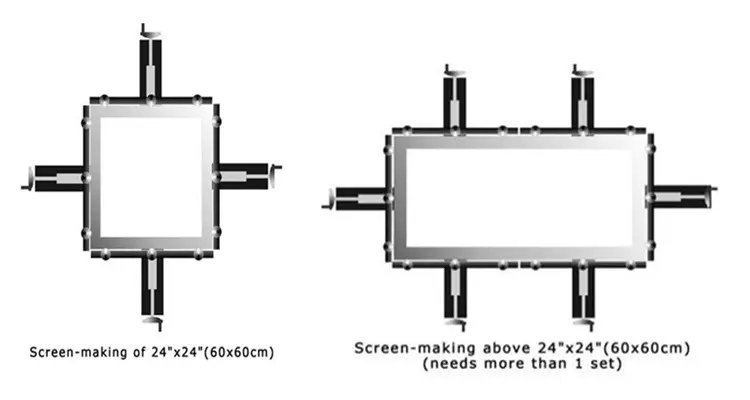
Its modular arrangement uses four 24-inch (60 cm) wide collets. One set can be used with screen frames below 24 × 24 inches (60 × 60 cm) in external dimension. Two sets can be combined to stretch screen frames below 48 × 48 inches (120 × 120 cm). This configuration supports work with different frame sizes while keeping the same stretcher system at the workbench.
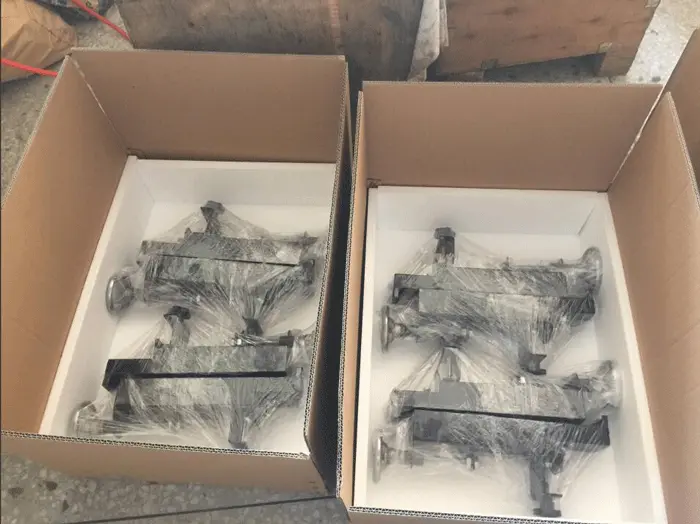
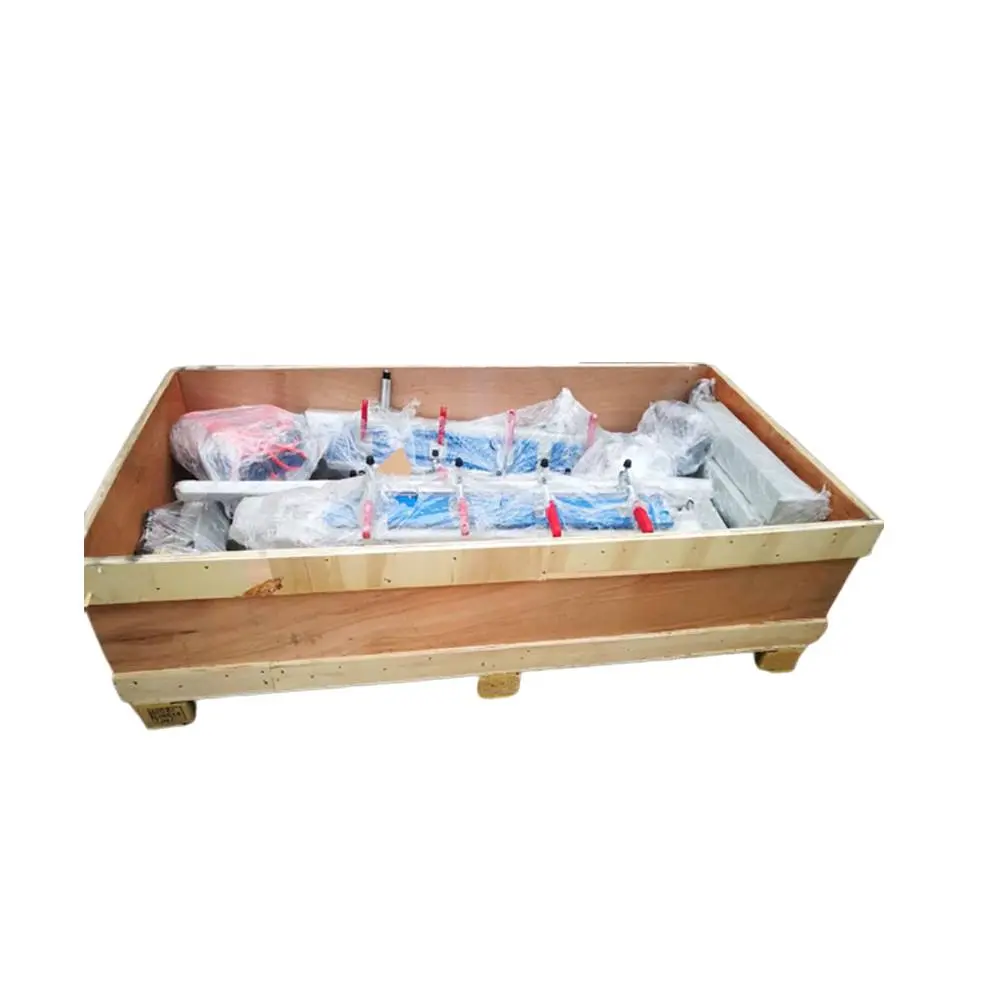
The listed maximum frame size is 24 × 24 inches for one set. The specified stretching force is 30 N. For handling and shipping reference, the package size is 67 × 53 × 21 cm and the listed weight is 20 kg.
Frame Capacity and Locking Bar Design
The four wide collets and combination option make this stretcher suitable for preparing frames within the stated size ranges. A single set serves frames below 24 × 24 inches (60 × 60 cm), measured by external dimension. When two sets are combined, the appliance can stretch frames below 48 × 48 inches (120 × 120 cm). Choosing the appropriate arrangement for the frame being prepared helps make the machine useful for a range of screen-preparation tasks.
Wide locking bars are critical components because they compress and hold the screen frame during stretching. The machine uses concave and convex rubber locking bars with proper rigidity. Each bar is 24 inches wide and has no joints. The design suits frames below 2 inches thick; common frame thickness is 1 to 1.2 inches. An adjustable position bolt allows the bar position to be changed to meet different requirements.
When preparing a frame, correct positioning and secure contact with the locking bars are important parts of the setup. The adjustment feature gives the operator a way to accommodate frame requirements, while the broad rubber bars provide the specified contact area for compressing the screen frame. Confirm that the frame is seated as intended before proceeding with adhesive and stretching.
Steel Construction and Workshop Benefits
The machine is made of steel and finished with advanced electrostatic spraying. Its structure uses different plate thicknesses according to the components’ load requirements: normal components are made from 0.12-inch steel plate, while force-bearing parts use 0.2-inch plate. This construction approach places the thicker plate on the parts that endure force and uses the specified plate thickness for the other components.
In screen-printing preparation, a dedicated stretcher helps organize the frame-holding and stretching steps before the screen is ready for subsequent work. The machine’s modular collets, adjustable positioning, and broad locking bars provide practical setup options for operators working with the supported frame sizes. Its stated force and frame capacity identify the intended operating range without requiring the operator to rely on an unspecified frame size.
For routine care, keep the machine and working surfaces clean, and check the locking bars, position bolt, and frame contact areas before use. Keeping adhesive residue from interfering with clamping and adjustment can help maintain a clear setup area. Follow the adhesive supplier’s handling and curing guidance, as the stretcher operation depends on applying adhesive and allowing it to solidify before removing the appliance.
Operating Procedure and Application
Use the following sequence when preparing a screen frame. Position the frame with its ragged face upside, then adjust its height to 0.04–0.08 inches (1–2 mm) higher than the baffle. Keeping the hand-wheel inside the screw rod is specified to help achieve better stretching effects. Apply screen adhesive in a coat that is neither too thin nor too thick, and begin stretching when the adhesive sticks slightly to the hand.
Place the screen frame on the machine with the ragged face upside.
Adjust the frame height to 0.04–0.08 inches (1–2 mm) higher than the baffle.
Keep the hand-wheel inside the screw rod for better stretching effects.
Apply screen adhesive, avoiding a coat that is too thin or too thick.
Stretch the screen when the adhesive sticks slightly to the hand.
After the screen is well stretched, apply the adhesive again.
Wait until the adhesive has solidified completely before dismantling the screen stretching appliance.
Following the sequence helps keep frame positioning, adhesive application, stretching, and curing in the correct order. The Screen Printing Small Stretcher Machine is intended for this screen-preparation process, with one-set or two-set use selected according to the frame’s external size.