
Need Help?
Our engineers can confirm the specification, voltage and shipping cost for your market.
Send InquiryJm Spv5060 Three Directions Micro Adiust Vacuum Screen Printing Table
 Product construction
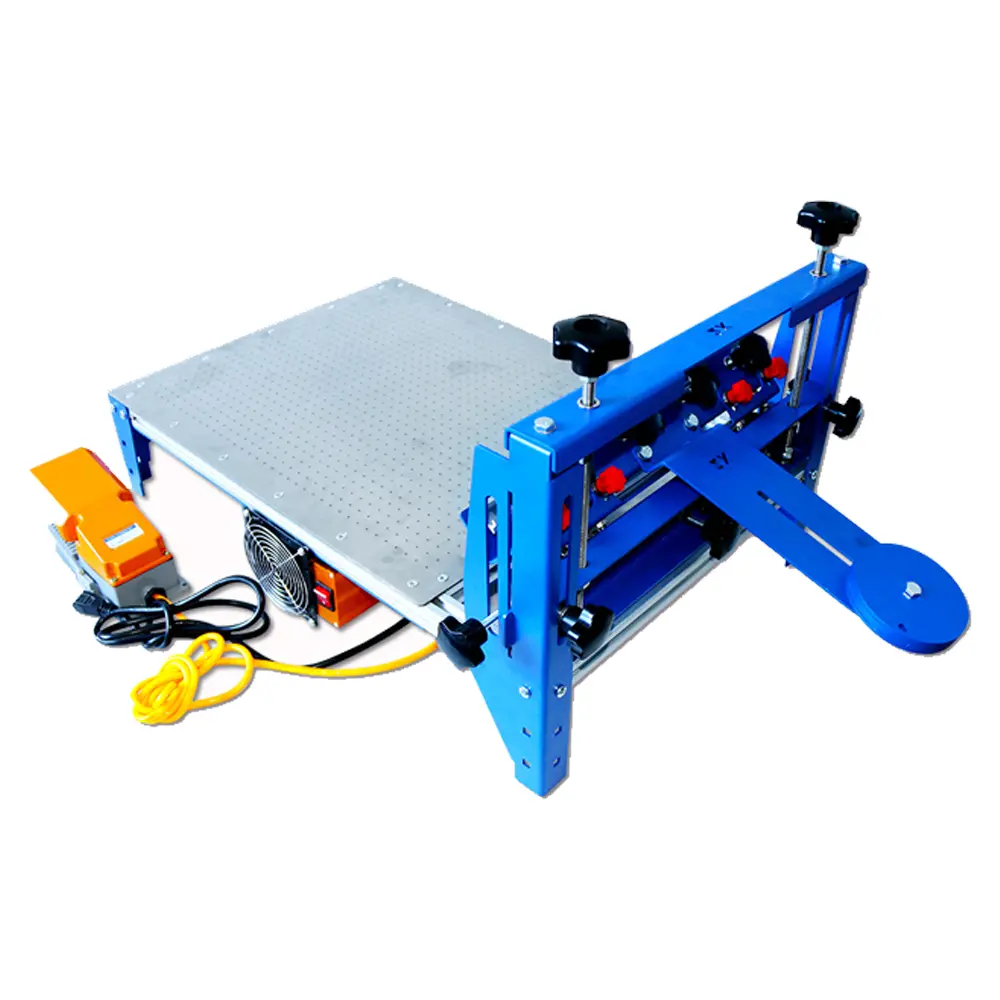
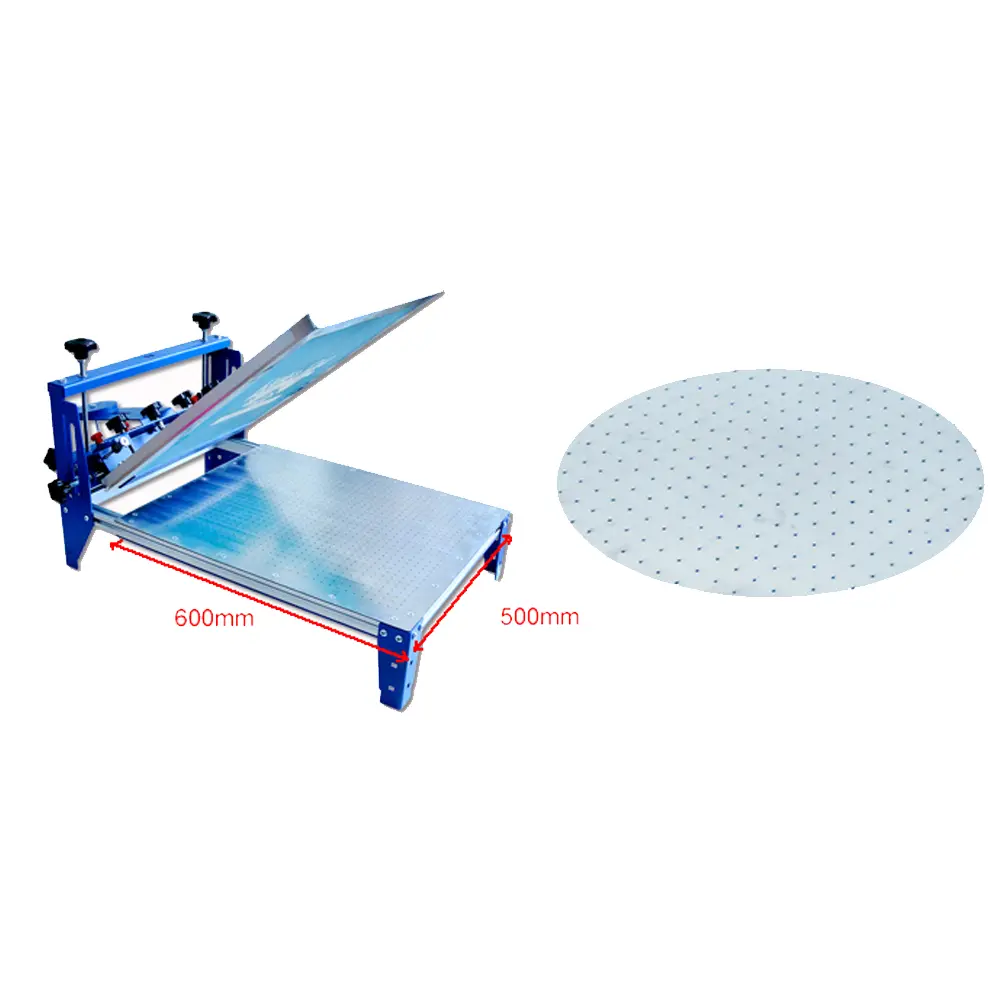
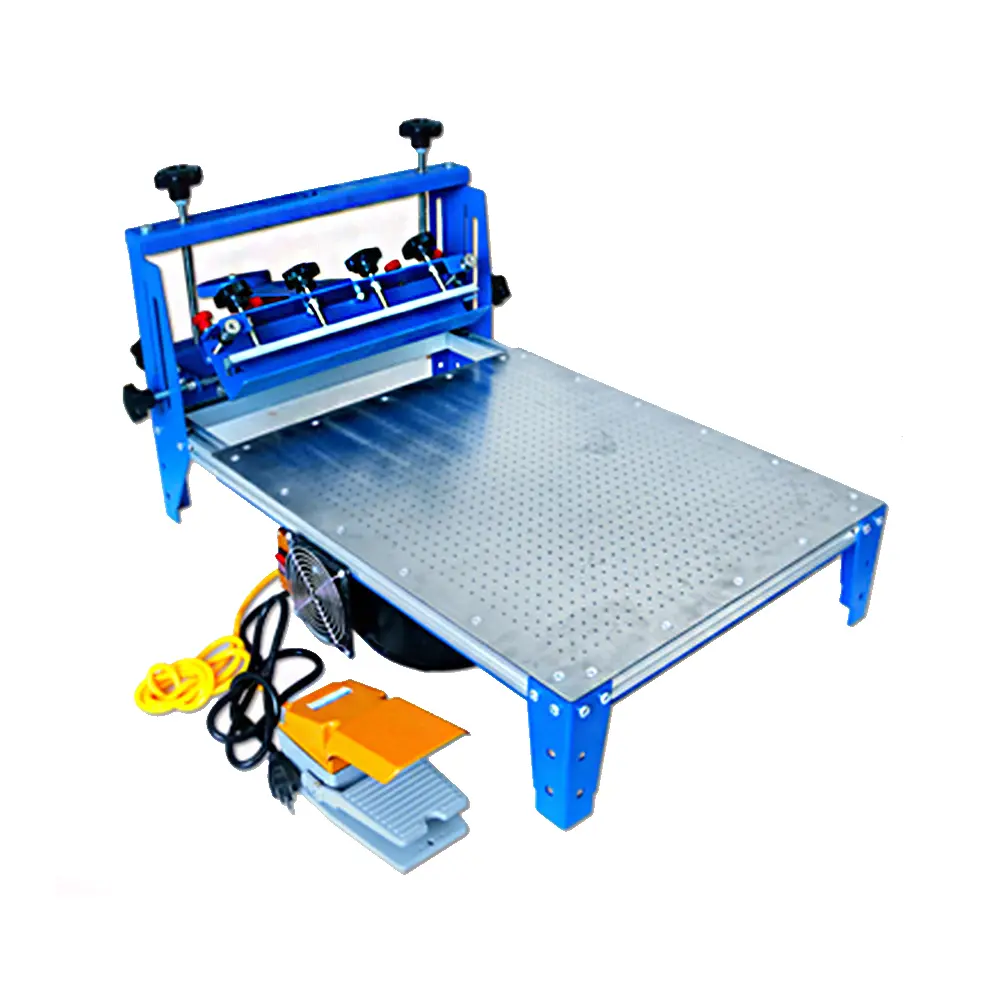
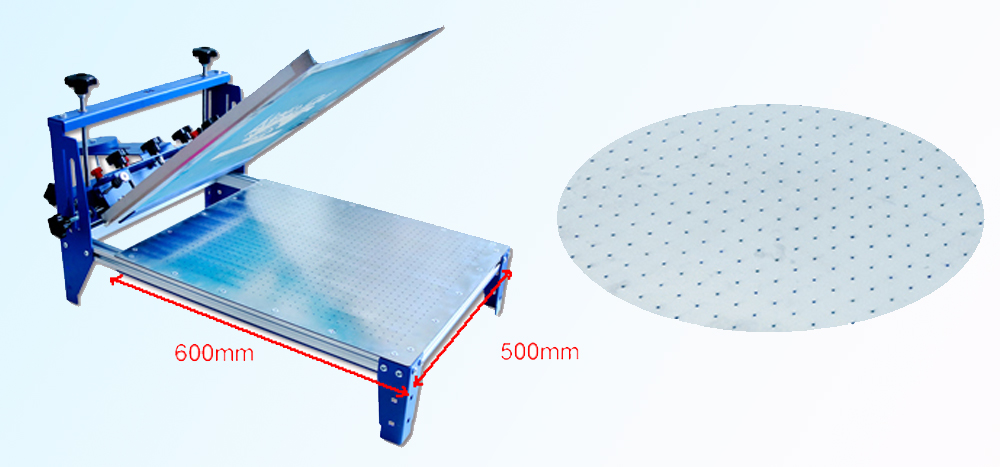
1. This screen printing table is made with a 2 mm stainless steel plate, cut by laser. The table surface measures 500*600mm, and the vacuum area measures 526*420 mm. The suction holes have a 1 mm diameter. The air-hole spacing is listed as ion, and the 36 rows are spaced 15 mm apart. There are 1044 air holes.
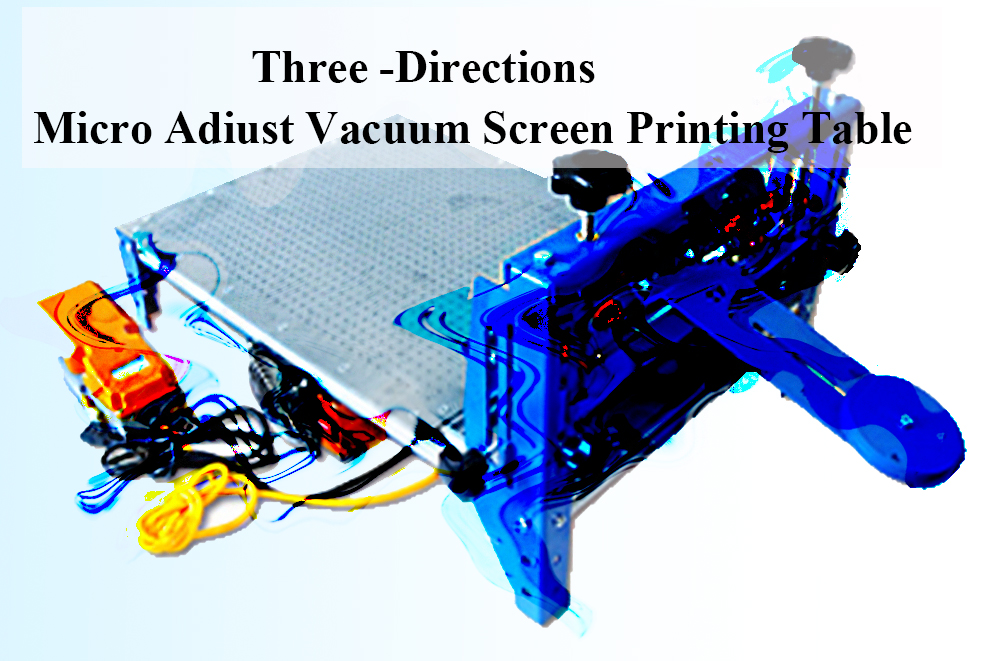
2. The fine three-direction micro-adjustment screen printing head can be adjusted using the knobs: 20 mm up and down, 20 mm forward and back, and 20 mm left and right.
Place the substrate on the table surface and start the vacuum pump. Align the screen pattern with the substrate, then clamp the screen frame.
Height adjustment: Place the screen frame flat on the platform. Depending on the substrate height or printing requirements, rotate the up-and-down adjustment handle to set the appropriate height, then lock it using the two rear positioning handles.
Left and right adjustment: Loosen the handles on both sides of the head, then turn the handle to make the required fine adjustment to the left or right. Tighten both handles when adjustment is complete.
Forward and backward adjustment: Slightly loosen the four red knobs on both sides at the front of the chuck, then make the required front-to-back fine adjustment. After adjustment, tighten the knobs and the four red knobs on top of the chuck.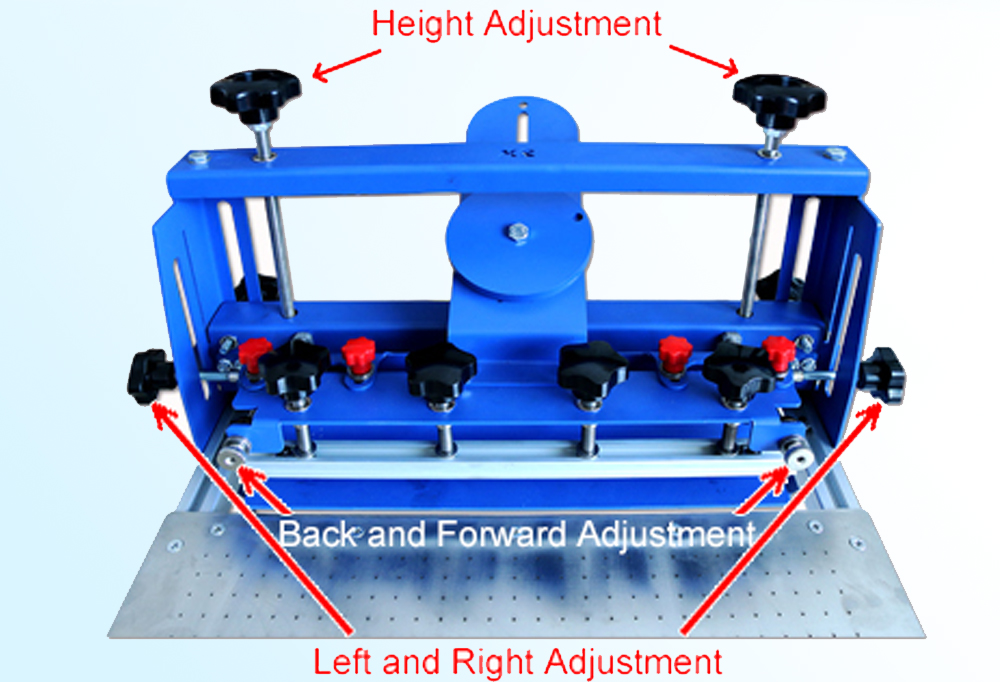
3. The screen frame is secured firmly. The screen frame chuck is 393 mm wide and 80 mm high, and accommodates a variety of screen frames with a thickness below 50 mm. The chuck is fitted with four fixing handles and a dedicated screen frame pressure bar to distribute pressure evenly across the frame.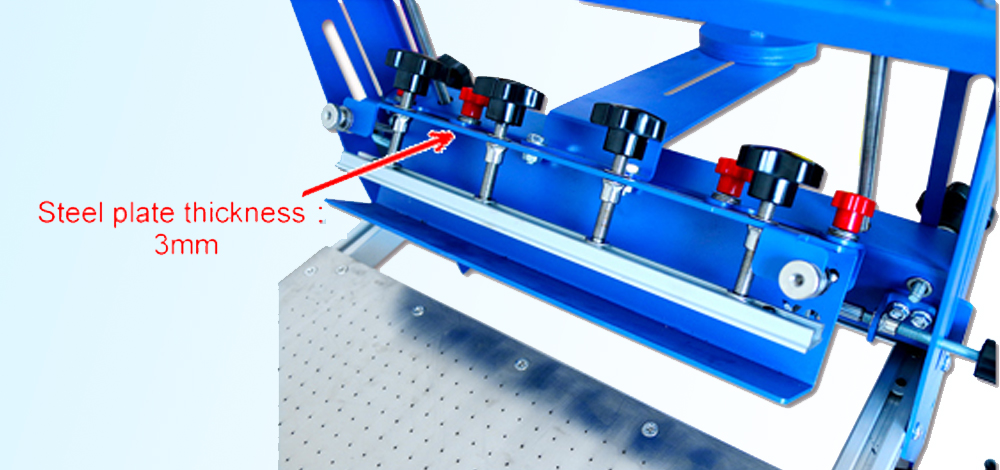
4. The static balance of the lifted screen frame is adjusted using the gravity balance plate. The machine comes with four gravity balance plates, which can be installed individually or together as needed. The balance plates can be moved forward or backward by 100 mm as required. If the frame is too heavy, a heavy object can be used to assist with balancing. Screws at the lower part of the balance frame adjust the screen frame lifting angle. The height of the lifted screen frame can also be adjusted as needed.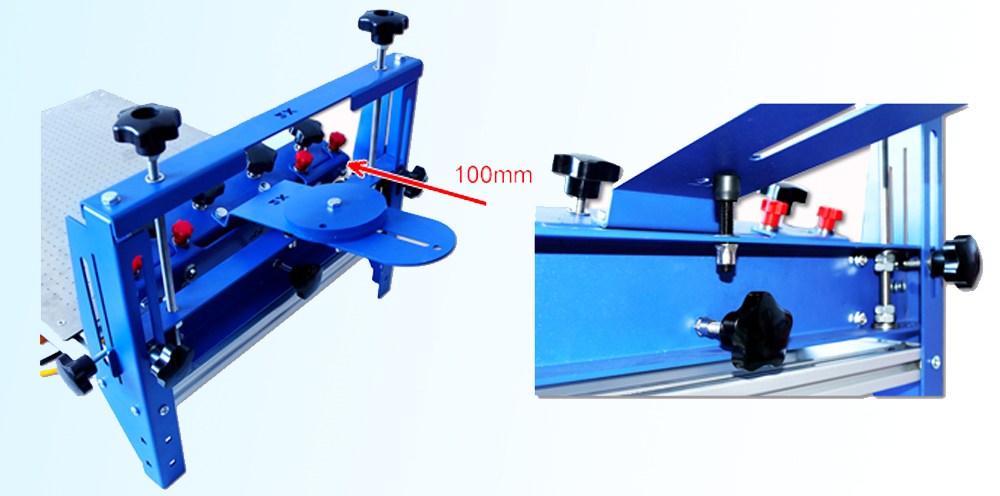
5. When the substrate is small, suction may be reduced. Covering the substrate with plastic sheets or paper can increase its adsorption.
6. The machine body features an advanced electrostatic spray finish for resistance to acids, alkalis, corrosion, and cleaning, with rust-free performance for long-term use. Some components are made of stainless steel.
7. A complete set of installation tools and detailed instructions is included for easy installation without additional tools.
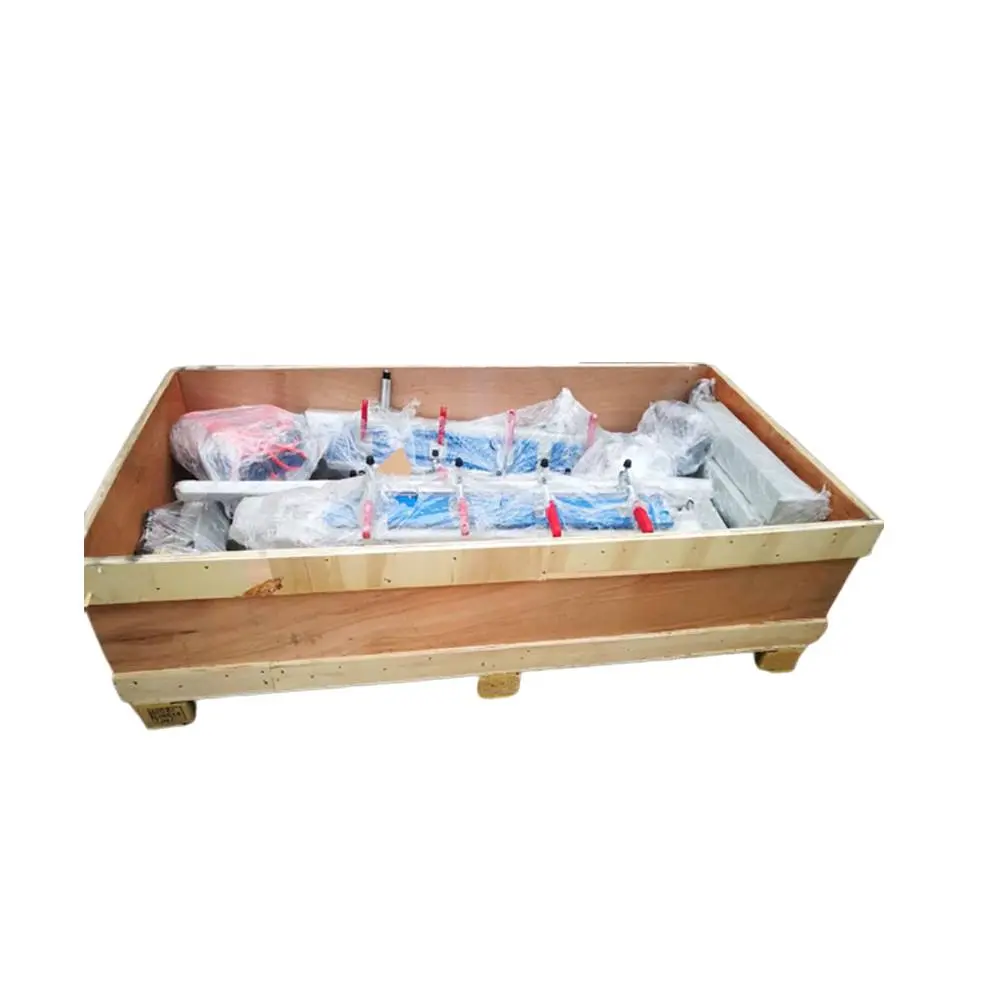
8. The machine is packed for export in a fumigation-free wooden crate that meets European and American standards. Metal parts inside the crate are individually packaged or separated to prevent direct contact with one another.
9. The machine is designed for desktop use and can be combined with a separate rack to create a floor-standing model.
Desktop machine dimensions: 750 mm long, 500 mm wide, and 400 mm high.
Height from the tabletop: 150 mm.
Floor machine dimensions: 750 mm long, 500 mm wide, and 970 mm high.
Height between the table and the top of the pallet: 730-880mm. The adjustable feet allow the height to be set as needed.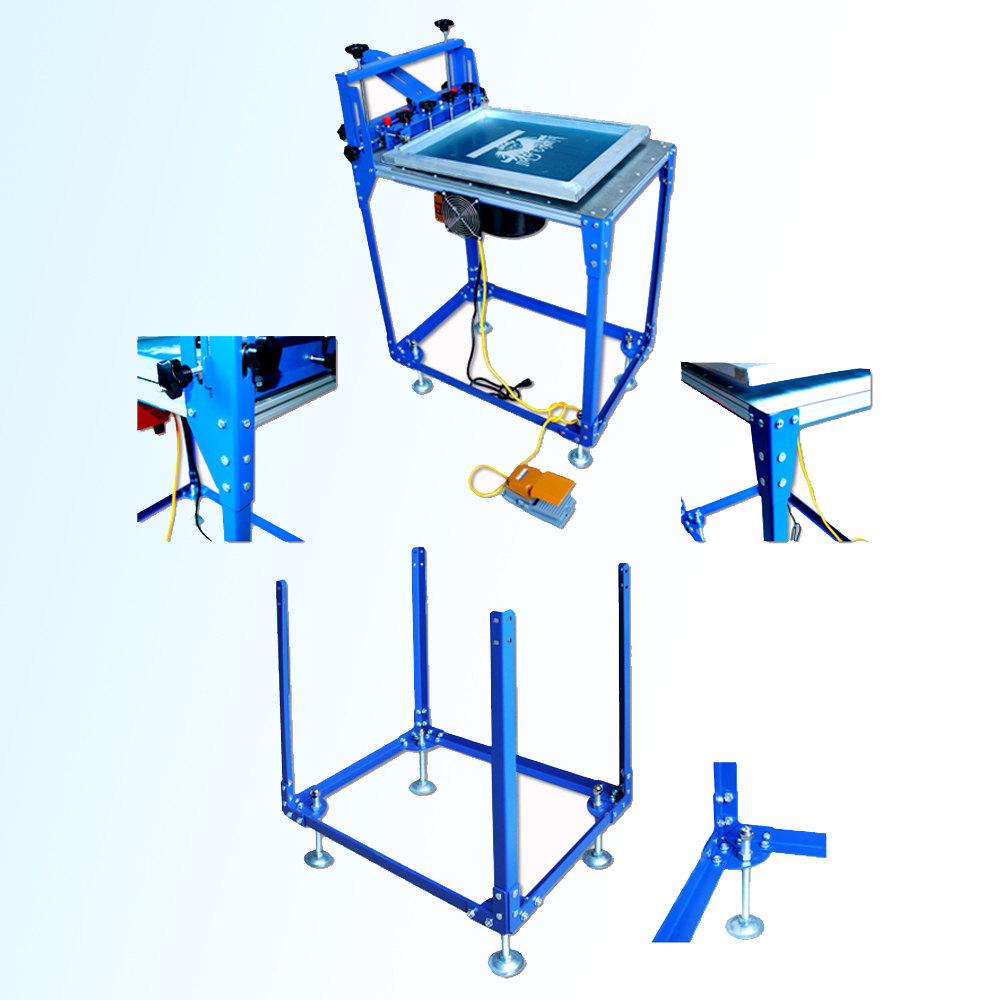 Product specifications
| Product code | JM-SPV5060 |
| Product color | Blue |
| Machine material | Steel plate |
| Metal surface treatment | Electrostatic spraying |
| Accessory materials | Stainless steel/galvanizing/nickel plating |
| Net weight (lb) | 31 |
| Gross weight (lb) | 35 |
Packing volume | 0.084 |
Product features
The vacuum table works by using the suction pump motor to rotate the impeller, compressing and expanding air within the pump chamber's fixed volume to create a vacuum (negative pressure). This creates a pressure difference between the pump air inlet and the external atmospheric pressure. Under the pressure difference, gas is drawn into the pump chamber and discharged through the exhaust port.
Air enters the vacuum screen printing machine through hundreds or thousands of small holes in the printing surface. The substrate is placed on the suction surface, where negative air pressure creates a pressure difference that holds the substrate in place. The main advantages of a vacuum screen printing machine include:
1. The substrate is held firmly against the table surface to prevent movement caused by external forces.
2. After printing, the substrate is prevented from moving with the ink due to its viscosity.
3. Once the substrate is positioned, the suction pump can be switched on or off to help place the substrate more accurately.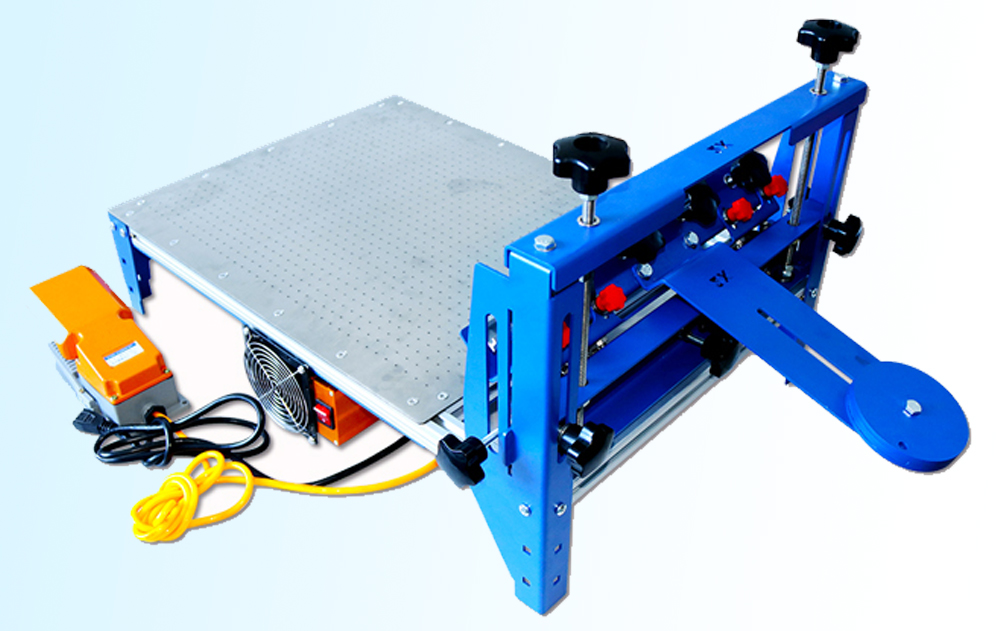
Product applications
Suitable for high-precision, fine screen printing on a wide range of flat materials, especially lightweight and thin products such as paper, plastic sheets, CDs, credit cards, and PCBs. It can also be used with films, cards, boards, paper, transfer paper, PVC, PET, PC, other soft or hard films, nameplates, and similar products. This machine can also print finely on heavier, thicker products, including paper boxes, glass, wood boards, metal plates, signage, and various plastic boards. It is not suitable for cloth, ribbons, handkerchiefs, or other textile products. For printing on textiles, a screen squeegee pallet adhesive is recommended.
Packing & shipping