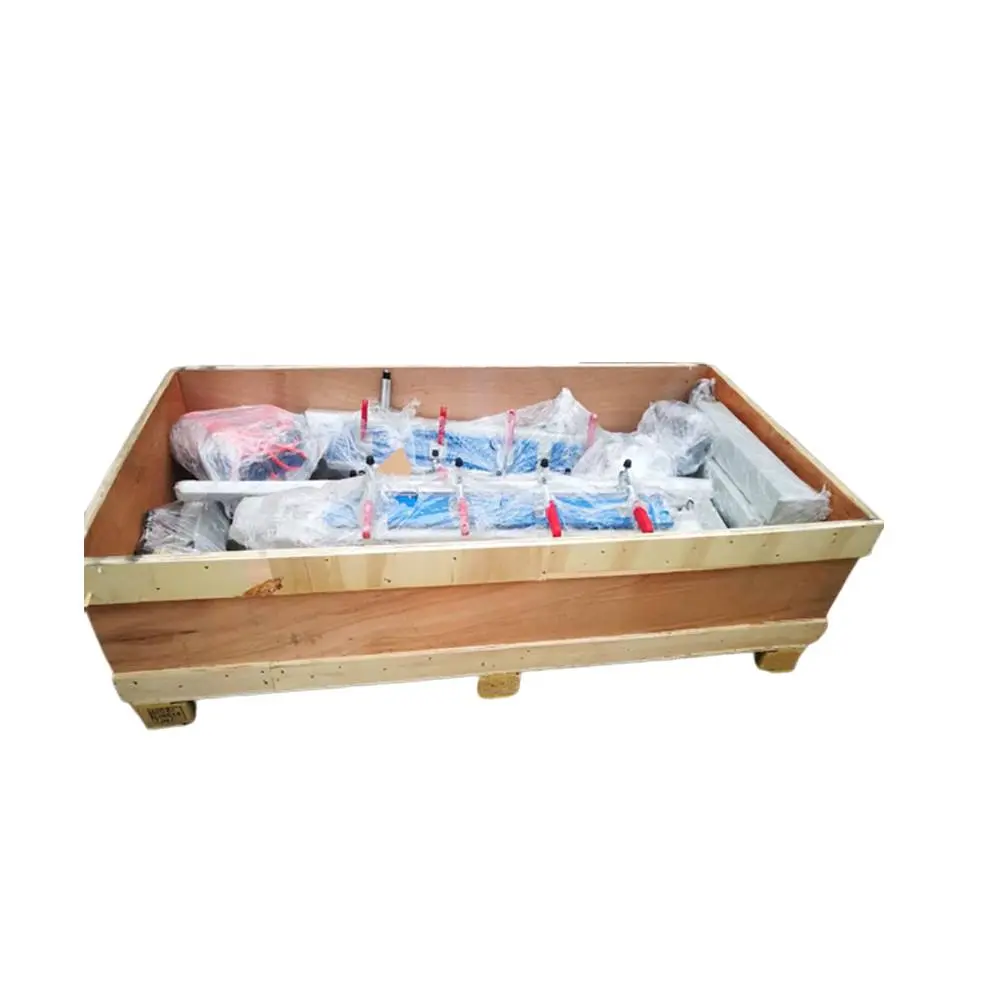
High Precision Screen Stretcher Machine Jm Ste1522
Product Description
Product name
High-precision
screen stretcher
machine
Product number
JM-STE1522
Frame size
1100 mm*2200 mm
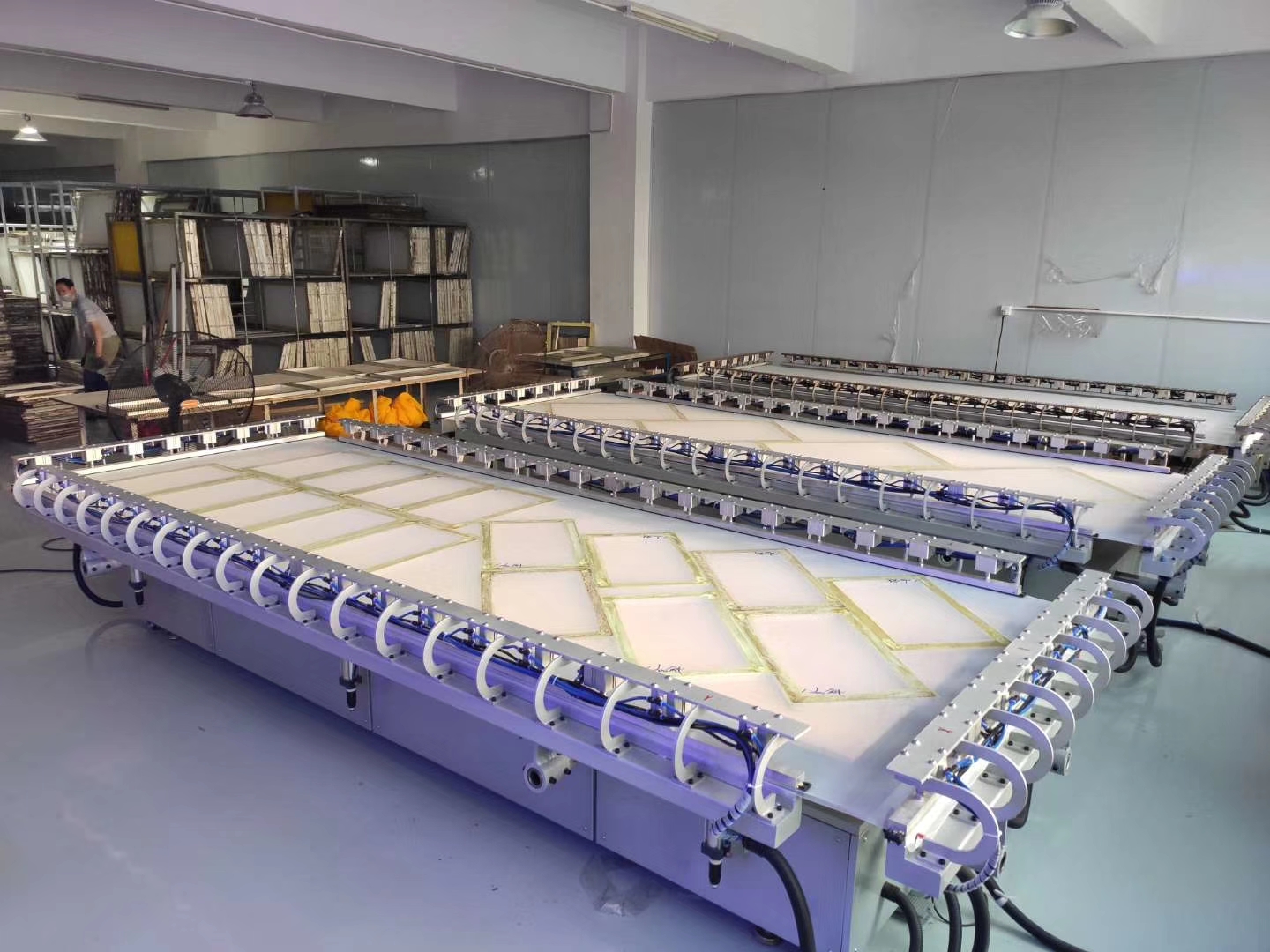
Machine overall dimensions
2700*1600*910mm
Product Specifications
Structural section
Item
Accessory name
Configuration details
Basic structure
Machine body structure
Square design
Sheet-metal bending / detachable cabinet
Flat frame
Square tube
Welded, surface-finished and machined
Dynamic drive structure
Screw system
Sino-foreign joint venture
Motor 380V
LP-1.5KW*2P
Gearbox
Sino-foreign joint venture
DRV900/1:50
Tank cooling system
Exhaust fan
AC~220V
Pneumatic configuration
Screen-locking cylinder
Joint venture
63C-25
SDA-25
Solenoid valve
Joint venture
QDC-Q4D2L08
220V- Q4D2L08
Pressure screen-locking cylinder
Joint venture
63C-25
SDA-25*60
Electrical configuration
PLC system
Tensioning and screen-stretching program
XINJE-XC3
AC~220V/48E
Monitor
Touchscreen
Sino-foreign joint venture TH765-MT7MS
Frequency inverter
Shilin
SS2-021-2.2k
Limit switch
Inductive switch
LKD-18*4P
PRCM12-4DN
D4MC-5020
Contactor
AC contactor
2510N*3
Schneider LC1E2510M5N AC220V
Product Features
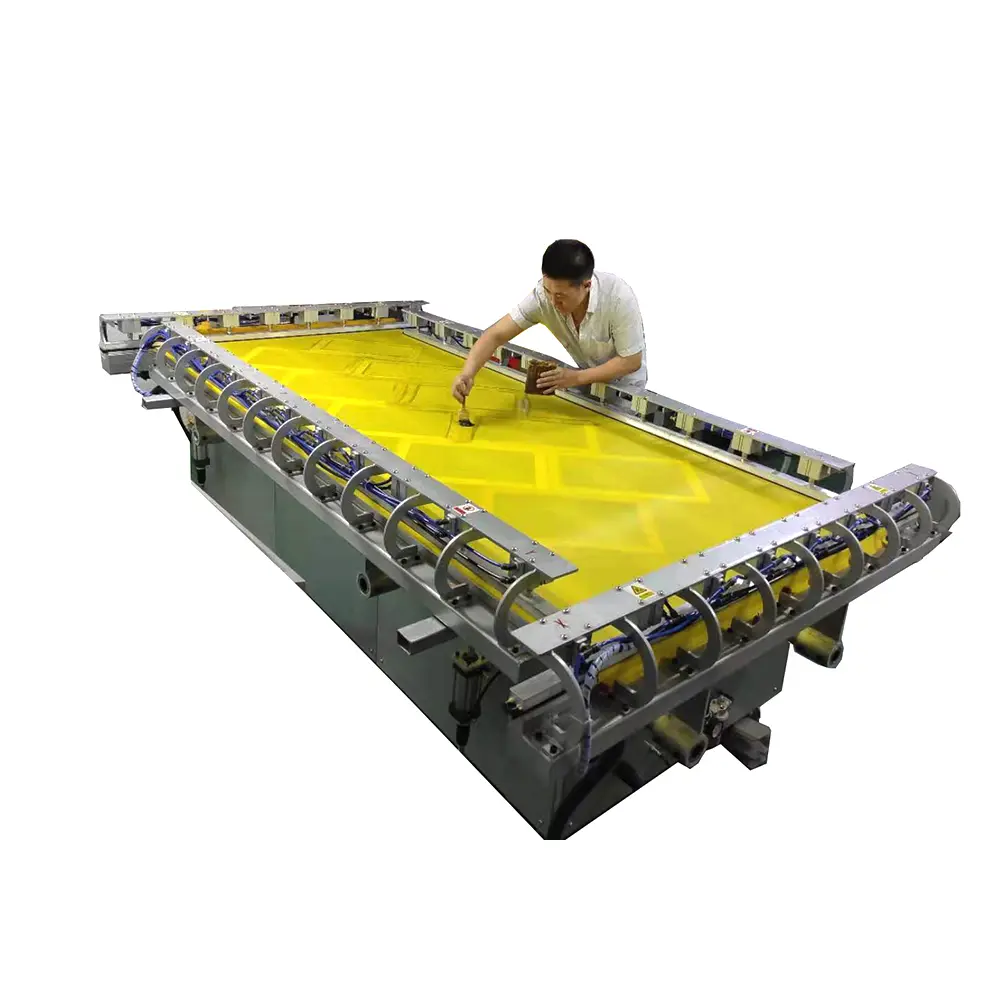
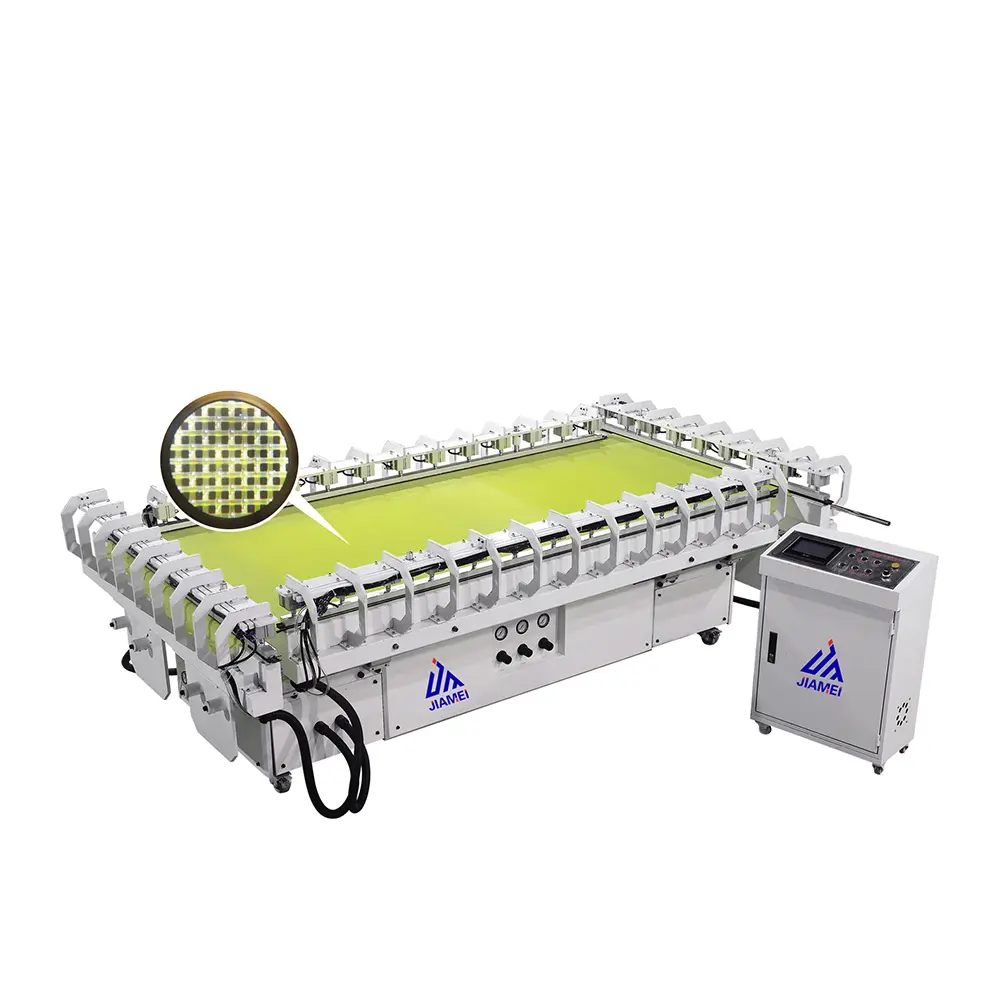
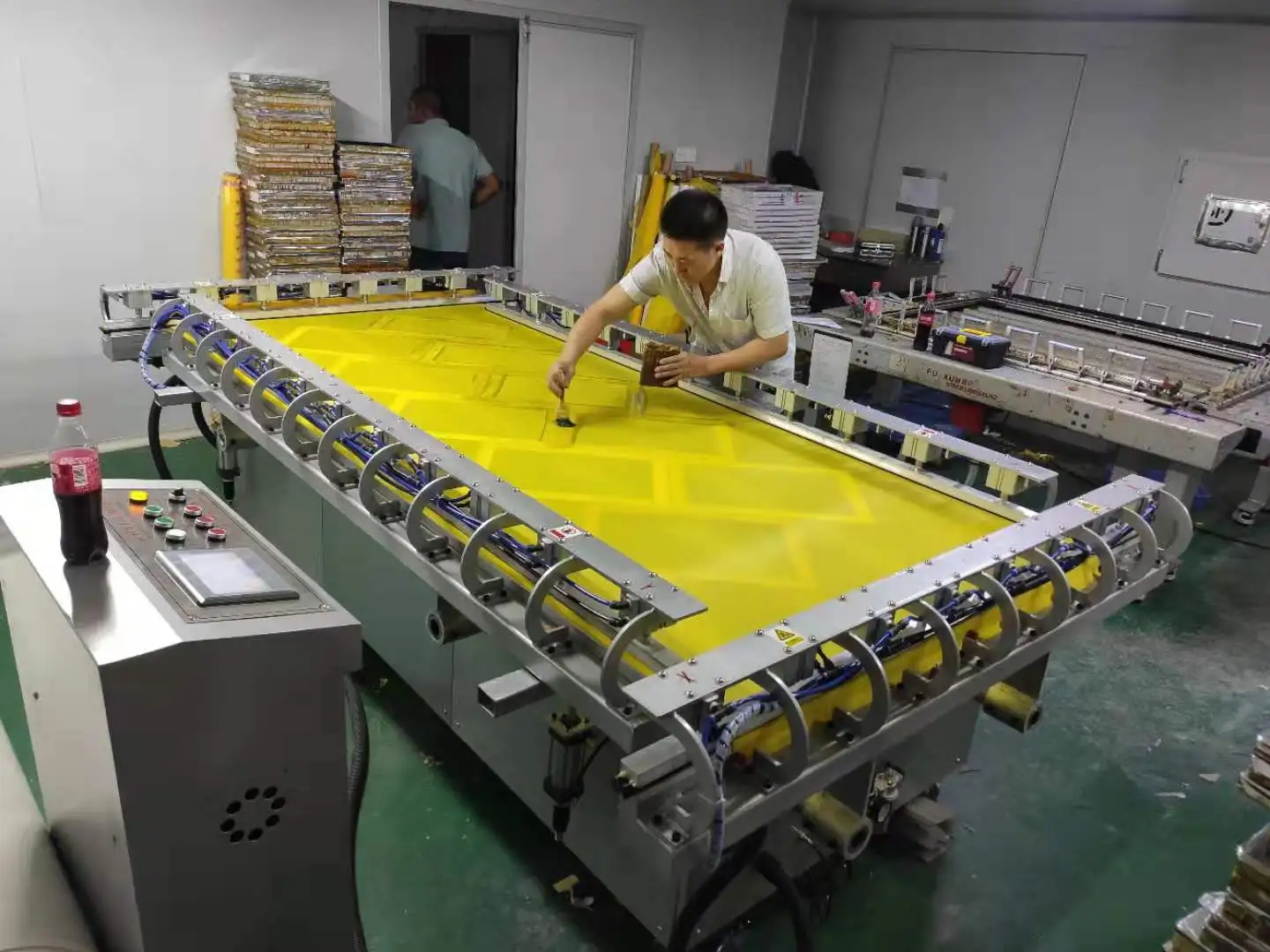
PLC microcomputer control works with an intelligent memory system and an intuitive human-machine interface. Simple operation helps ensure accurate, stable and efficient tensioning and screen-stretching movements.
The machine uses a scientifically designed clamping principle with a fully automatic cylinder-operated screen-locking device. Locking the screen is quick and straightforward, with even force and precise positioning. Cylinder pressure and screen-cloth traction are aligned at the optimal force-parallel distance. Tension ranges from 0–60N, with no screen slippage, gaps or displacement-related distortion.
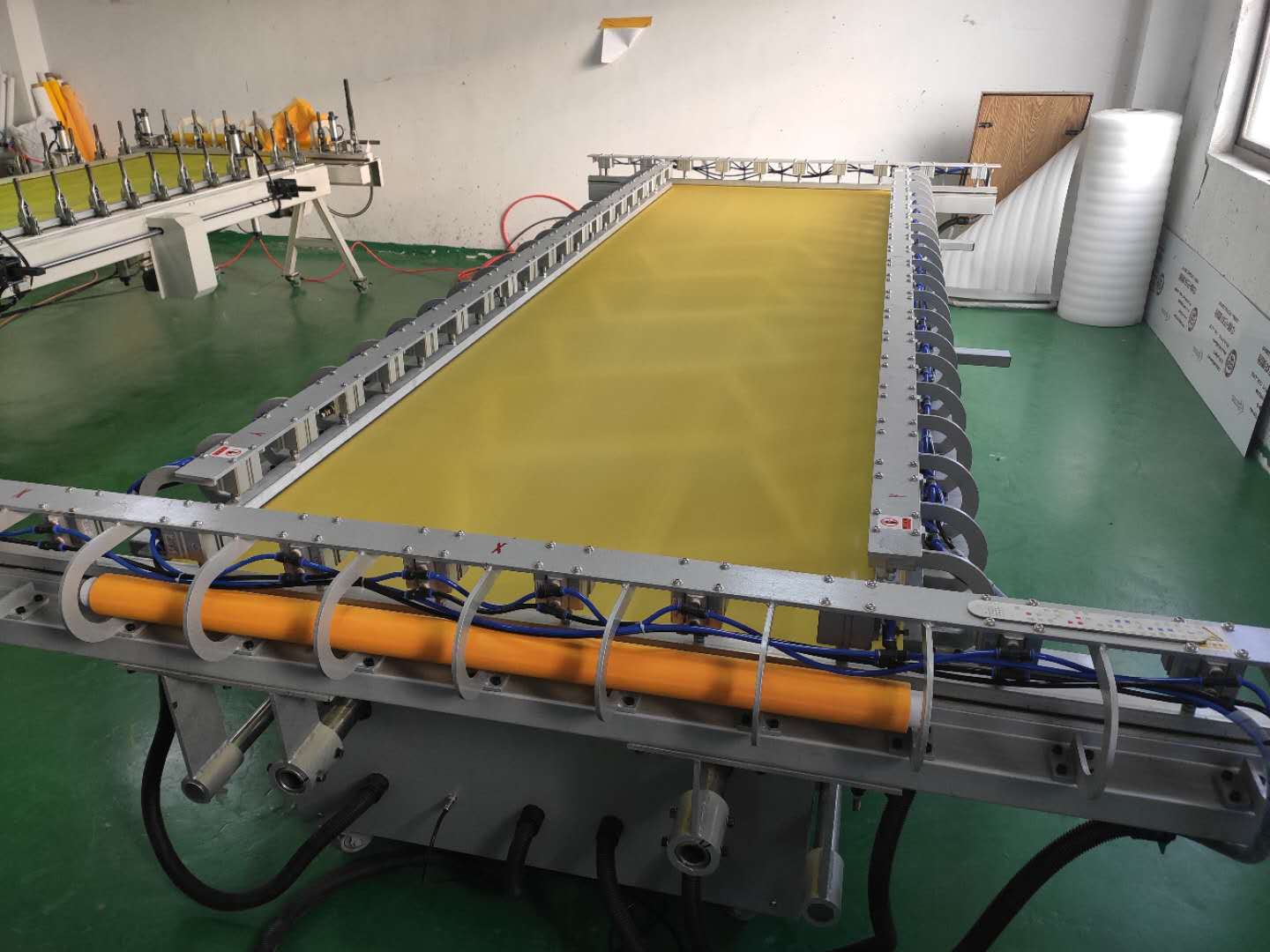
The machine body features a high-strength mixed-structure steel construction.
Full-stroke data for stretching along the X and Y columns is displayed with micrometer (UM)-level precision. Intelligent director memory mode supports different mesh types and specifications. Tension and screen-stretching stroke parameters can be selected, stored and fine-tuned as needed, combining user-friendly controls with automation. This helps maximize stretching efficiency and simplify the operation.
The machine introduces the bridge method to support a rational screen-stretching process. As the mesh is stretched along the X and Y columns, the four right-angle machine sections automatically balance and buffer force. This helps reduce force differences, compensate for errors progressively and reach the required tension in stages. The process is designed to help prevent mesh breakage when operating at the maximum tension
Multiple operation-protection devices are built into the machine. The electrical and pneumatic circuits are designed for practical operation and low power consumption, in line with the trend toward energy efficiency. Professional customization is available for different industries, requirements and sizes.
A digital scale display for the screen-locking system, together with screen-positioning gauze and auxiliary components such as a foot switch, helps position the mesh accurately without cutting. When the required tension is below 40N, the machine is equipped with an automatic, quiet pneumatic system.
The automatic top-net system allows adjustment of the lifting distance, air pressure and other settings. Its top-net mode is designed for practical, convenient operation.
Product Details
Key Features
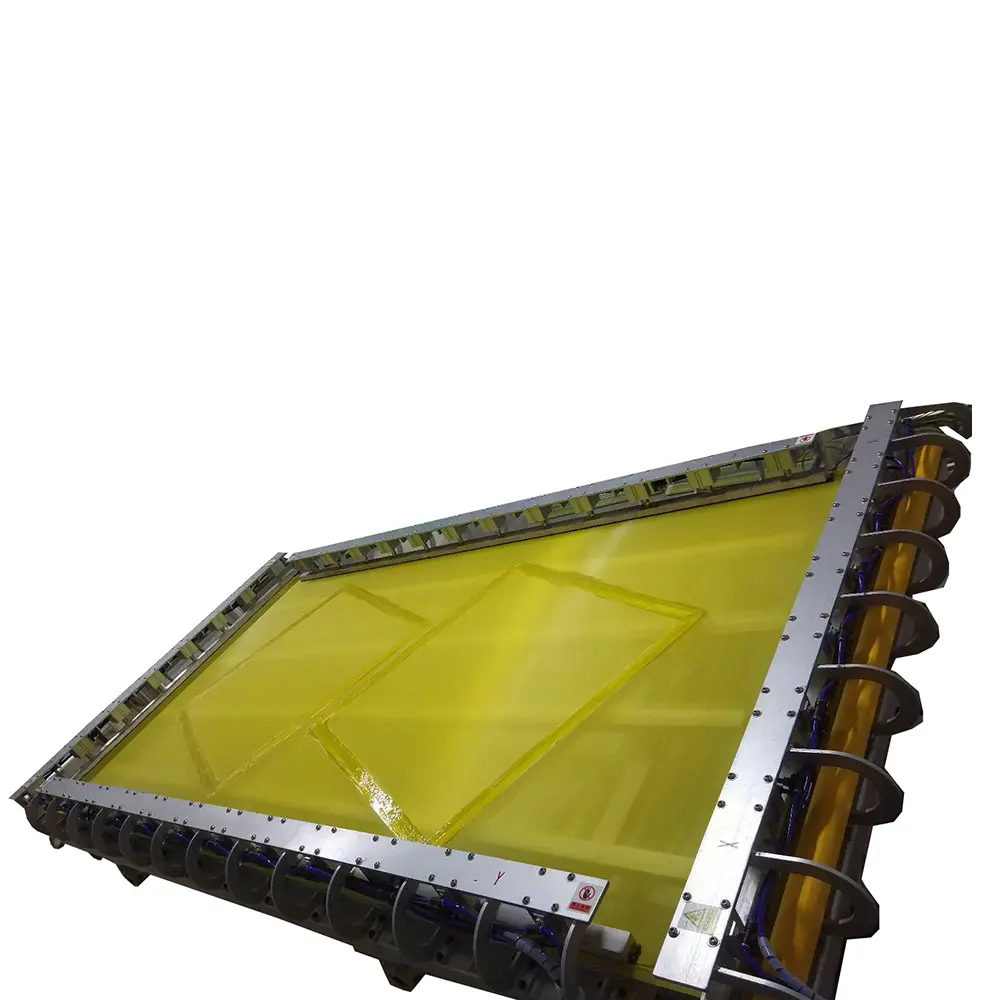
1. Integrated screen locking eliminates the need for individual manual chucks. It helps prevent uneven clamping pressure, inconsistent screen uniformity and flatness, ripples caused by gaps between chucks, and mesh breakage from uneven force.
2. The machine moves beyond the traditional idea that screen stretching must be performed at an angle. It provides true vertical X/Y-line stretching, reducing defective-product waste associated with angled stretching and helping save mesh yarn.
3. The precision stretching method applies force in the X and Y directions simultaneously while maintaining consistent speed and force. This helps achieve maximum mesh uniformity (reference value: ± 0.5N) and make effective use of the mesh.
4. Intelligent memory automates screen stretching, replacing cumbersome manual screen locking and other less efficient processes. The machine provides memory space for more than 100 sets of stretching data, described as unprecedented in China. It is more than 3 times faster than traditional manual or electric screen stretching, improving efficiency while reducing unnecessary labor and resource use. (Reference value: 3-5 minutes to complete a screen-stretching operation)
5. The stable, high-strength structure supports stretching stainless steel, composite and high-tension screens. It helps prevent distortion and yarn displacement, capabilities not matched by traditional screen-stretching equipment.
6. The machine is designed for straightforward operation. This is a core focus of its design: staff can become proficient in operating and using it within 1 hour, reducing the need to find specialized operators.
7. For professional screen-making businesses, this equipment is suitable for stretching screen-printing mesh of any type. Its high efficiency, low energy consumption, quality output and reduced labor requirements can provide a competitive advantage.
Applications
This high-precision, high-tension screen stretcher is used in printing, solar photovoltaics, circuit board production, LCD touch-screen manufacturing, electronics, glass printing and other fields. It stretches a range of mesh materials, including polyester, nylon and stainless steel, using a straight-pull method.