
Need Help?
Our engineers can confirm the specification, voltage and shipping cost for your market.
Send InquiryJm Mcp2430 Curved Surface Screen Printing Machine
Product Description
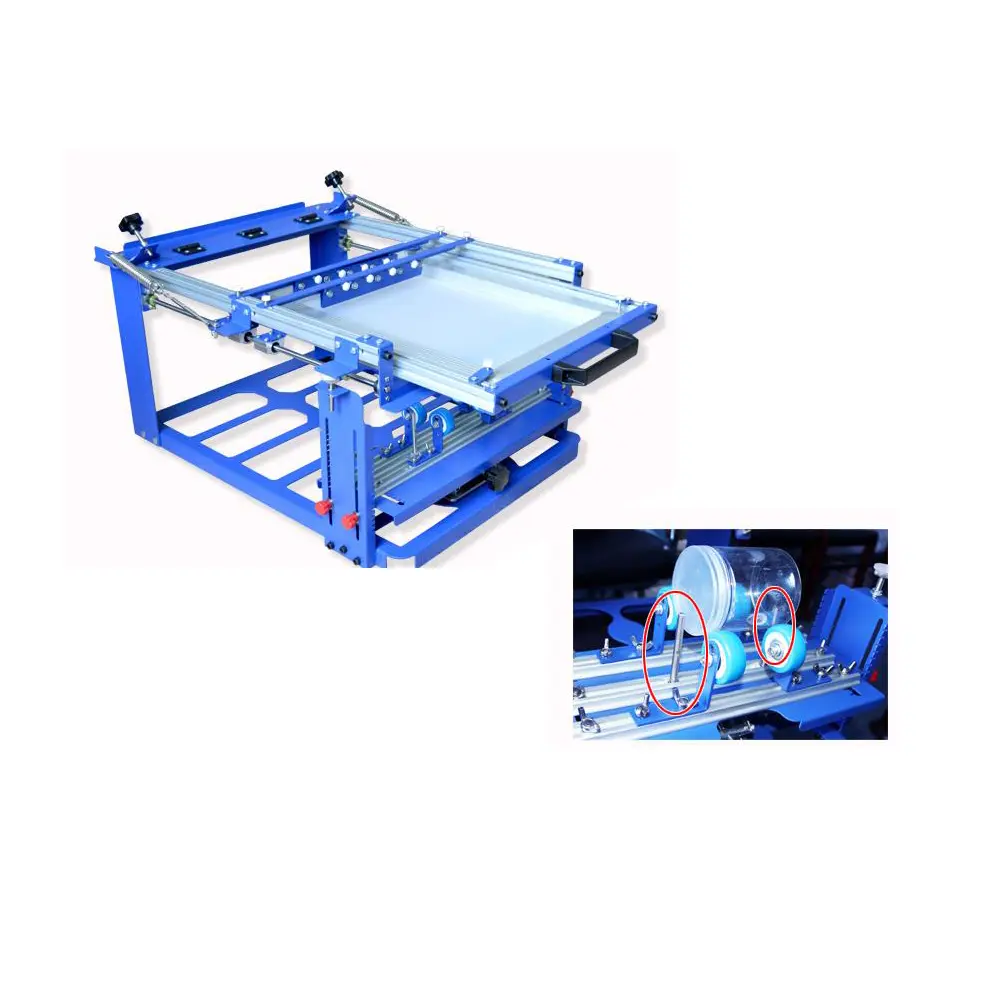
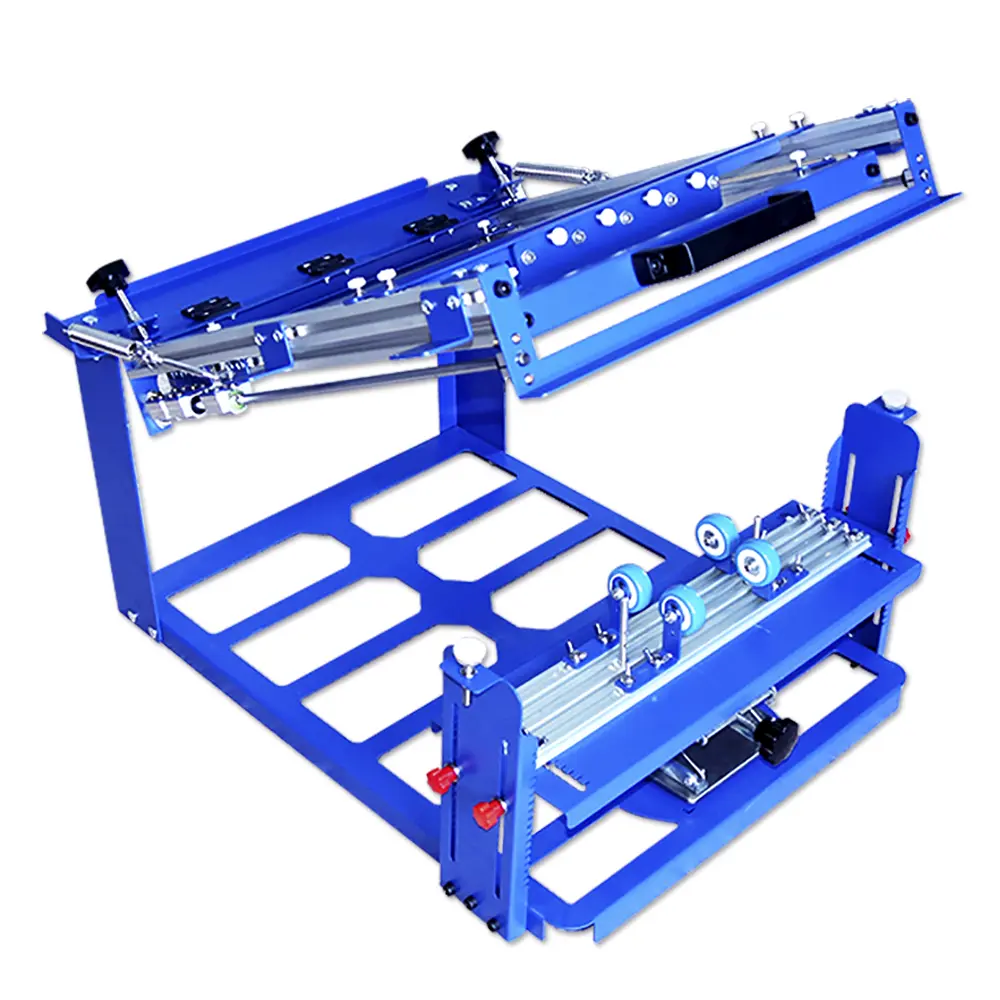
This curved surface screen printing machine is designed primarily for printing on cylindrical and conical products with diameters below 150 mm.
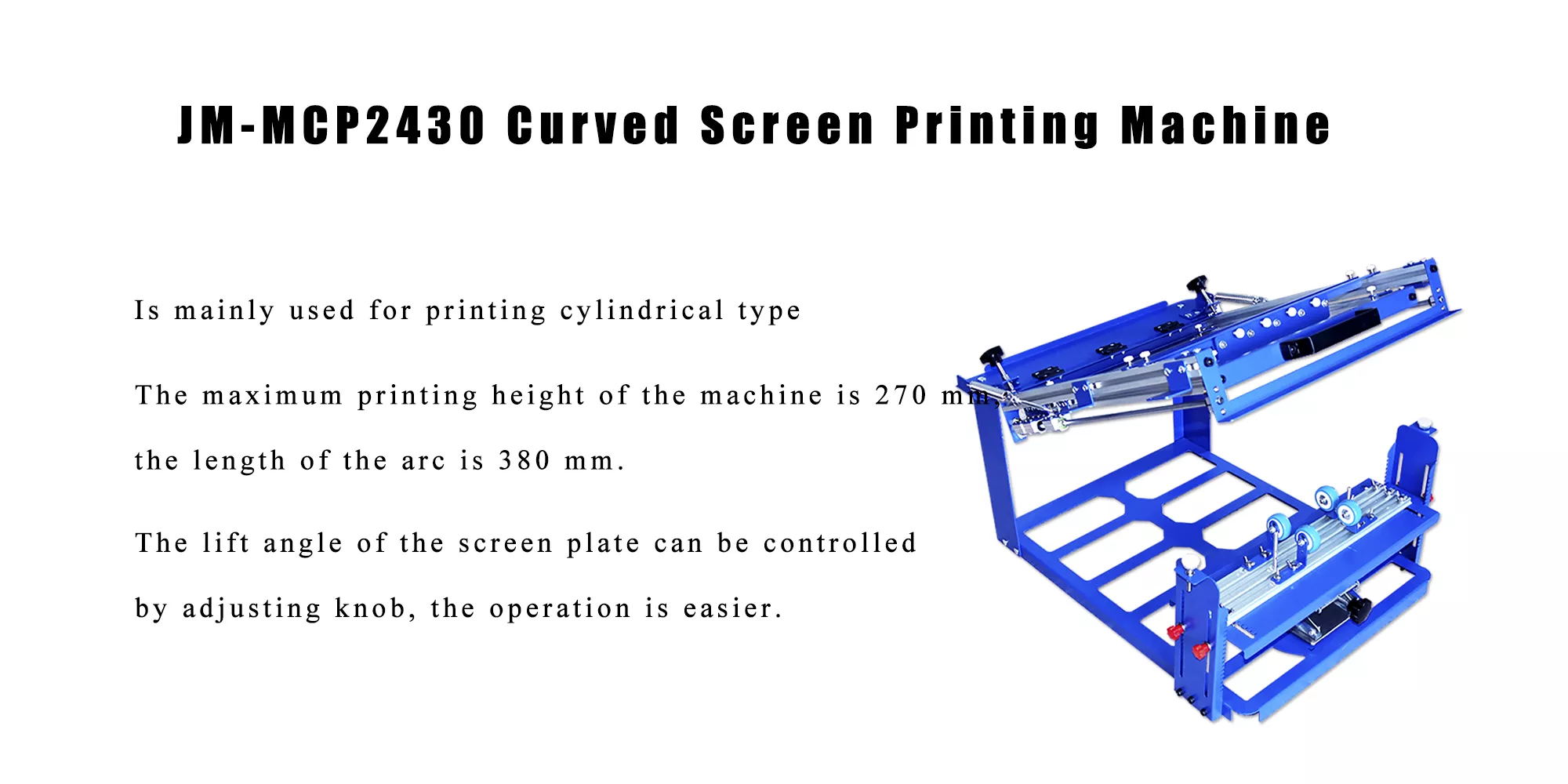
The machine offers a maximum printing height of 270 mm and an arc length of 380 mm.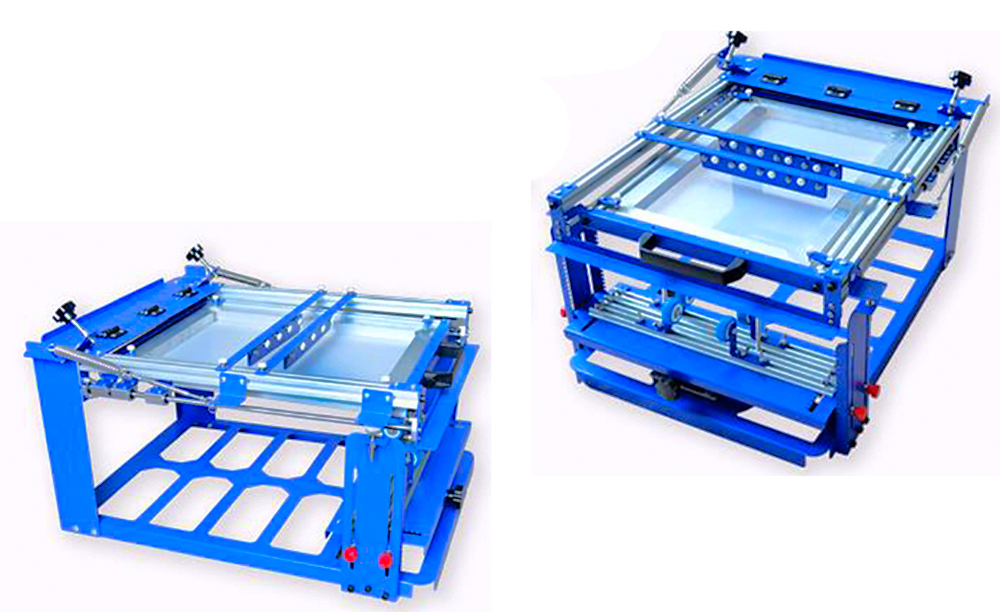
Product Specifications
- A screen-frame height-positioning structure supports stable printing. A parallel placement plate is fitted at the front, and the machine remains firm and steady during operation. Printing supplies and tools, including ink buckets, can be placed on the horizontal board at the rear of the machine.
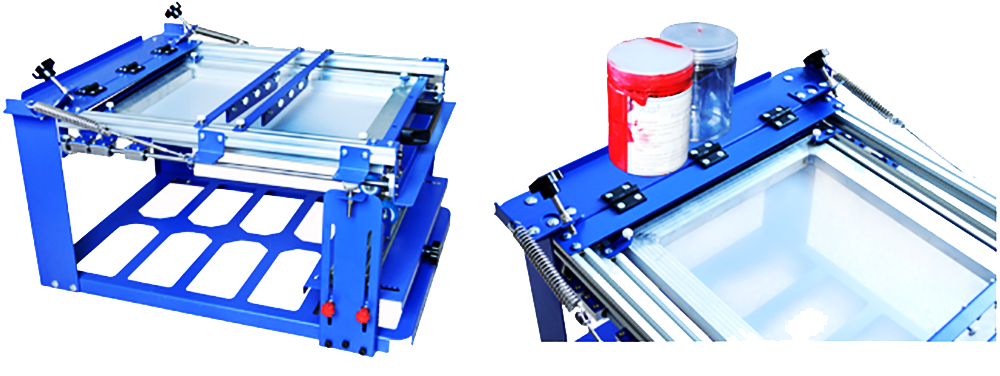
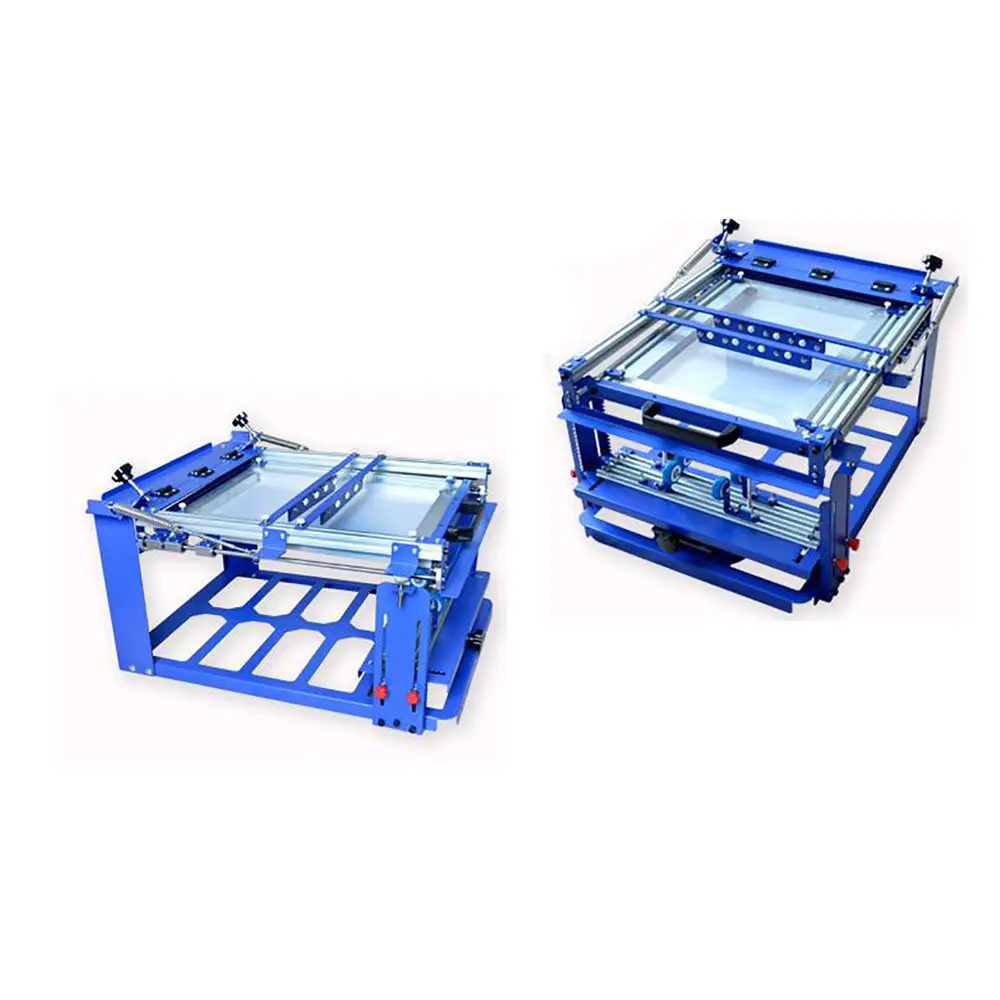
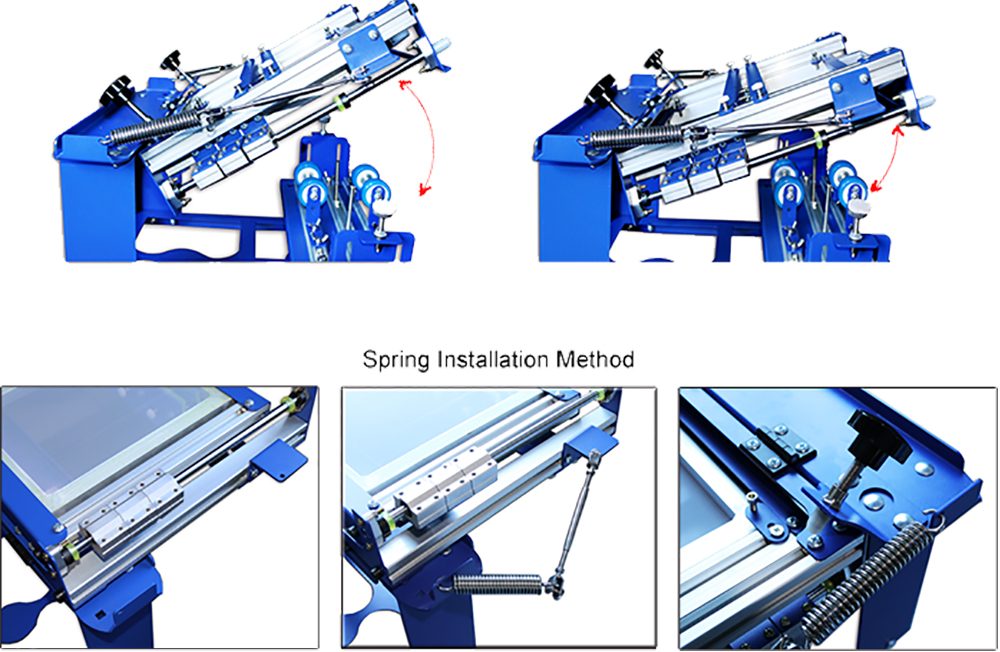
- Springs lift and tension the screen frame. A flower-basket screw adjusts the screen-plate lifting force, while an adjustment knob controls the lifting angle for easier operation. After installation, keep the spring tension on both sides as even as possible to help prevent the screen frame from distorting.
- The screen frame is straightforward to install and remove. Insert the screen plate from below the printing-plate rack into the rear support plate, then position it in the front support plate and tighten the screen-plate fixing screw. The machine is designed for a screen frame with an outer diameter of 560*410 mm and a height of no more than 30 mm. Two screen frames are included with the machine.
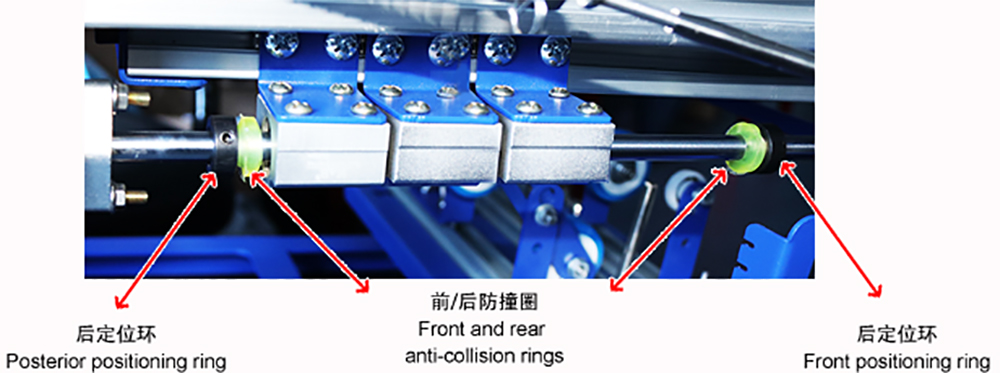
- The positioning ring on the optical axis controls the frame’s forward and backward travel. After setting the screen-plate and substrate placement-table positions, the user can lock the ring. A collision rubber ring between the positioning ring and slide block prevents direct metal-to-metal contact as the frame moves, reducing impact noise and protecting the metal components.
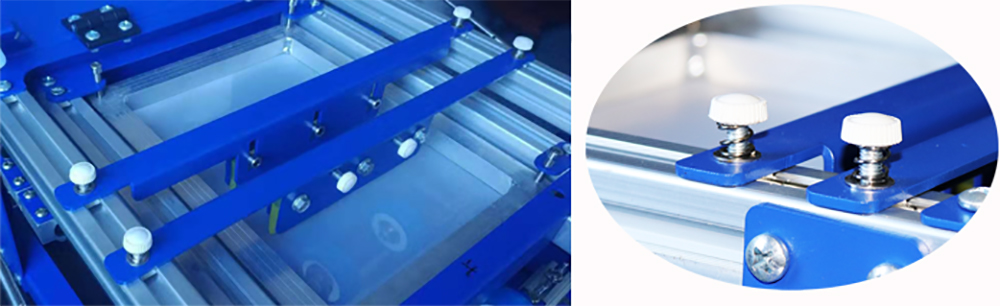
- The printing-squeegee rack and ink-return rack use a double-plate clamp design for quick installation and removal. Springs are fitted between the screws connecting both sides of the main frame and rack. During printing, the operator can adjust pressure on the squeegee and ink-return plate as needed.
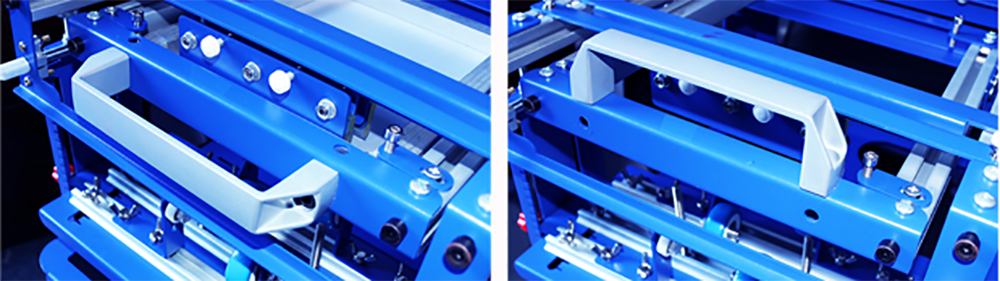
- The push-pull handle can be installed vertically or parallel to suit the operator’s preference.
- The substrate placement platform uses a knob-operated lifting and locking structure. Use the lifting handle beneath the platform to adjust its height. First loosen the knobs on both sides of the baffle, raise the platform to the required height, then tighten both locking knobs to secure it. The platform’s side-to-side height can be leveled using the concave teeth on both sides of the baffle.
The bottom of the substrate printing rack is designed to move back and forth. Three long aluminum bars are installed at the bottom of the lifting placement platform: the bars on both sides hold the substrate placement racks, while the center bar holds the substrate limit posts.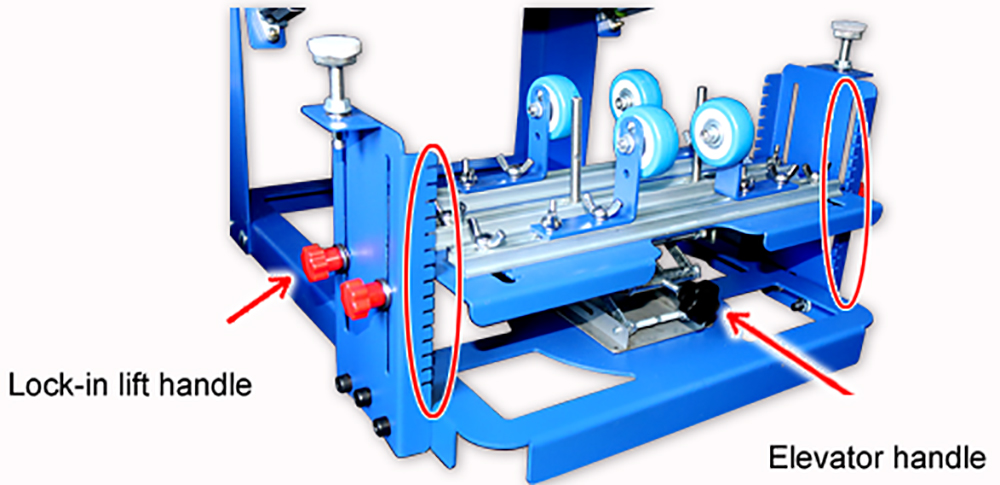
- The substrate placement-rack installation bar can move back and forth by approximately 140 mm. For more accurate positioning, guide the parallel movement using the concave teeth on the placement table.
- Install a limit post at each end of the substrate limit-post bar. After adjusting the printing steps, place the substrate in the printing rack and move the two posts toward its ends, leaving a 1–2 mm gap from the substrate surface. Do not position them too closely, as this may interfere with substrate rotation. Tighten each limit post with a wrench. This arrangement improves placement accuracy, helps keep print positions consistent, and reduces positional deviation caused by variations in substrate placement.
- Two sets of substrate placement wheels are supplied: blue rotation wheels with a diameter of 50 mm and white rotation wheels with a diameter of 26 mm. Either set can be installed in the main frame or the additional frame, allowing users to select the wheels to suit their adjustment needs.
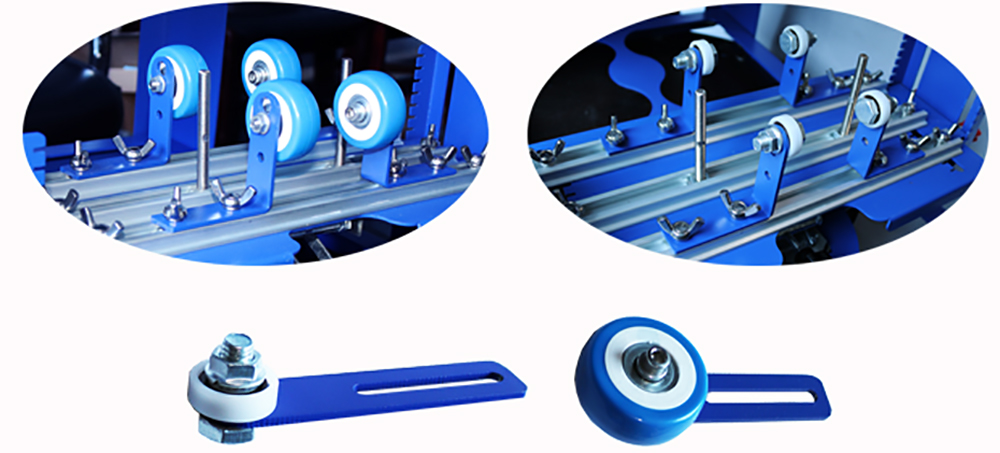
- The included attached plate works with the substrate placement assembly in the main frame and is mainly intended for printing conical products. It can be mounted vertically to the main frame with two screws or cross-connected to the main frame’s inclined body with one screw.
- The machine is fully adjusted before leaving the factory. The customer only needs to install the spring and screen-frame landing board before use.
Features
- The machine body has an electrostatic-sprayed metal finish designed to resist acids, alkalis, corrosion, cleaning, and rust for long-term use. Some components are made of stainless steel and aluminum alloy.
- A complete set of installation tools and detailed instructions is included to support straightforward installation without additional tools.
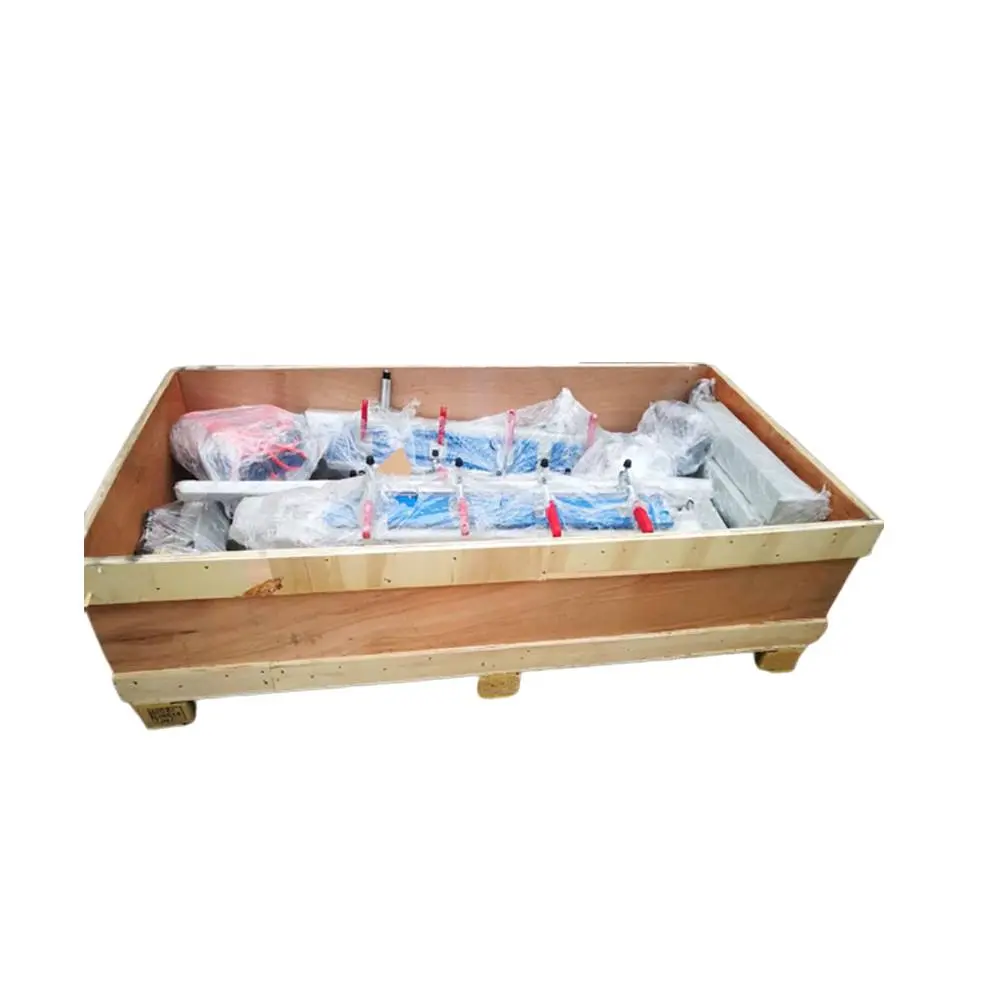
- For export, the machine is packed in a fumigation-free wooden crate to European and American standards. Metal parts are individually packaged or separated inside the crate to prevent direct contact between components.
Applications
This curved surface screen printing machine is primarily used to print cylindrical and conical products made from materials such as plastic, glass, and metal. Typical applications include wine bottles, medicine bottles, cosmetic bottles and other packaging containers; mugs, thermos mugs, beer mugs, and red mugs; as well as glass tubes, pens, ballpoint pens, fishing rods, bats, and other small cylindrical products.
Not suitable for cylindrical or conical products with deeply concave or convex printing surfaces, or with spots and other non-flat surface features.

Our Advantages
- Improve substrate placement accuracy and help keep print positions consistent after loading.
- Speed up substrate placement without marking or manual adjustment. Place the substrate directly in position and limit movement during printing.
- The included attached plate works with the main-frame substrate placement assembly and is mainly used for conical products. It can be mounted vertically to the main frame with two screws or cross-connected to the main frame’s inclined body with one screw.
- The machine is fully adjusted before leaving the factory. The customer only needs to install the spring and screen-frame landing board before use.
- The machine body features an electrostatic-sprayed metal finish designed to resist acids, alkalis, corrosion, cleaning, and rust for long-term use. Some components are made of stainless steel and aluminum alloy.
- A complete installation-tool set and detailed instructions are provided, making installation straightforward without extra tools.
- Export packaging uses a fumigation-free wooden crate built to European and American standards. Metal parts are individually packaged or separated inside the crate to prevent direct contact.