
Need Help?
Our engineers can confirm the specification, voltage and shipping cost for your market.
Send InquiryJm Em5060
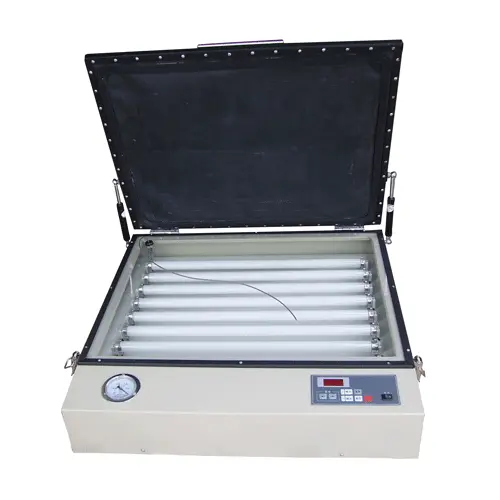

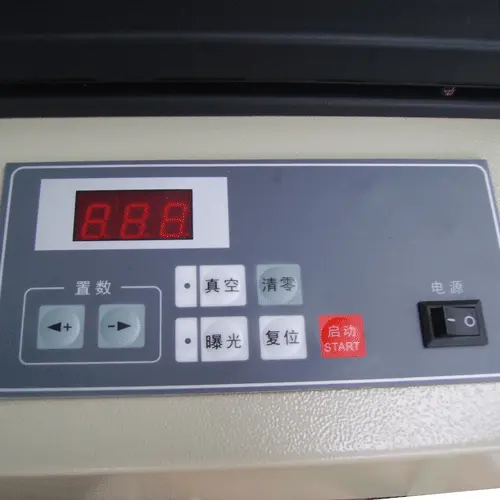
JM-EM5060
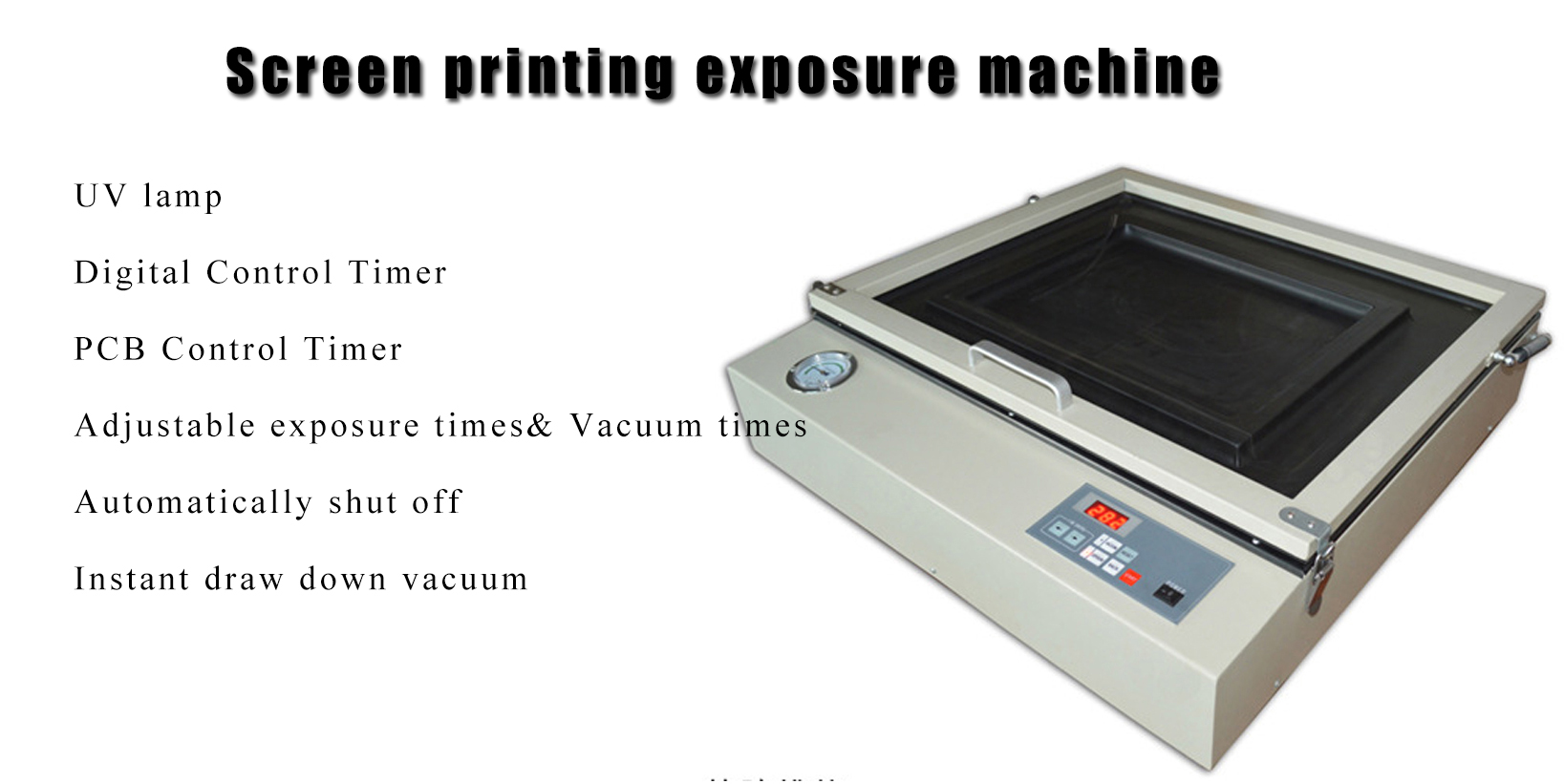
The plate-making machine is a contact exposure imaging device used to produce printing plates. It applies pressure—including atmospheric or mechanical pressure—to bring the original and photosensitive plate into close contact. This allows the image on the original to be accurately transferred to the photosensitive plate through a photochemical reaction. The machine consists mainly of a light source device, exposure chamber, vacuum chamber, electrical components, machine base, and other parts.
Product Specifications
JM-EM5060 Vacuum Exposure Unit | 110V/220V | Maximum working area 500*600mm, 20″ * 24″ | • Light source: UV light |
| 50Hz, 250W | • Lamp power and quantity: 20W*8pcs | ||
| • Digital display for exposure time settings | |||
| • Gross weight: 43KGS |
Advantages
1. Uses a high-quality metal halide lamp for a long service life.
2. The reflector cover is made from aging-resistant materials.
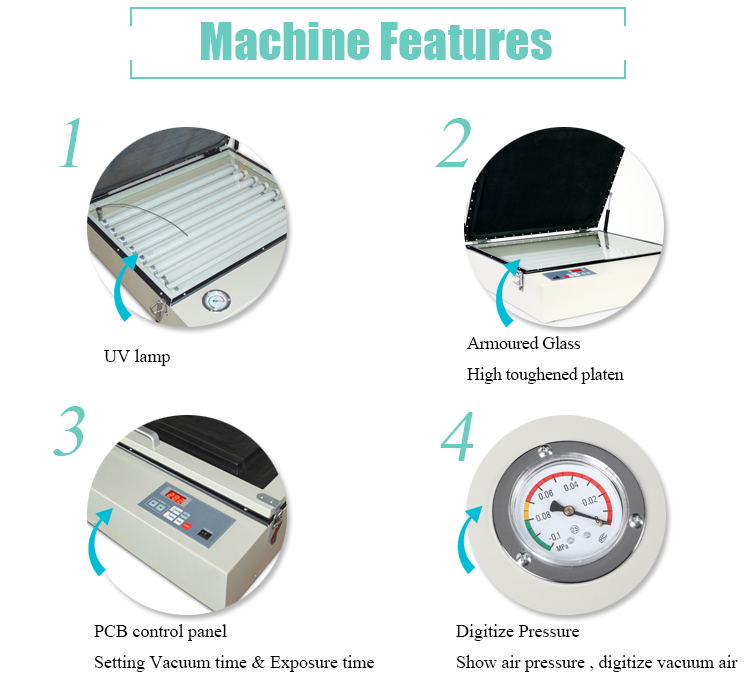
3. Reaches vacuum quickly, helping save printing time.
4. Exposure time is adjusted and controlled automatically.
5. A high vacuum level makes it easy to transfer and reproduce fine lines.
6. The lamp door opens and closes automatically during exposure and when the process is complete, helping extend lamp life.
7. The high-strength rubber layer helps the film fit closely against the frame.
8. Screen printing machines in different sizes are also available to meet customer requirements.
Operating Notices
1. Unplug the machine if it will not be used for an extended period.
2. After completing each plate, switch the machine on and off according to the specified timing.
3. Do not use the vacuum if the screen frame is wet. Otherwise, water may be drawn in and cause the vacuum pump to rust.
4. Keep the worktable clean and dry. After use, clean it with a soft, delicate cloth.
5. Store the machine in a ventilated, dry place away from corrosive materials.
6. Do not store the machine in a place with high heat or humidity.
7. After turning off the lights, wait 5 minutes for the tube to cool before turning them on again. Otherwise, lamp service life may be reduced.
8. Press the light switch for 1 second; do not hold it down for long, as this may burn out the trigger.
Working Principle
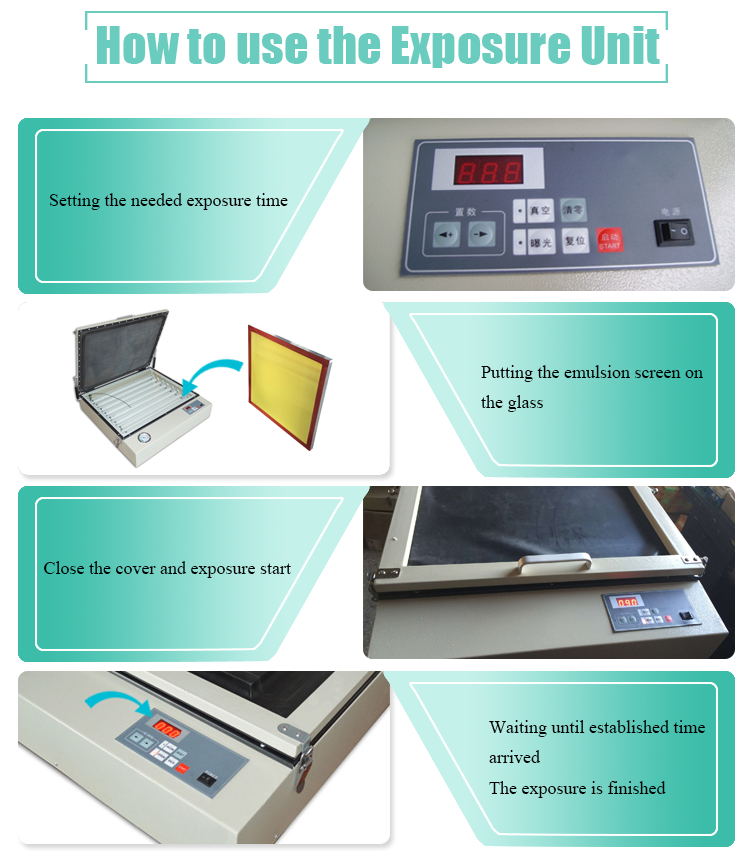
Screen printing screens are coated with light-sensitive emulsion using a scoop coater. Once the emulsion is dry, place a positive print of the image on the screen. During exposure, areas of the emulsion that do not receive UV light wash out, leaving tiny openings in the screen. The surrounding areas exposed to UV light cure. Ink can then pass through the open areas of the screen onto the substrate.
Main Features
1. Rational design and easy operation: Built around principles of usability and practicality, the carefully designed tabletop structure makes screen exposure easier and more precise.
2. Independent vacuum and exposure time settings with automatic memory: Set the vacuum and exposure times separately to suit requirements, within a range of 0-999 seconds. When exposure is complete, the lamp power is cut off automatically; the machine deflates and beeps. Turn it off after this process. For the next exposure, reconnect the power supply and the machine will operate automatically using the previously saved settings.
3. The high-quality oilless vacuum pump is durable and requires no oil injection.
4. Eight special UV exposure lamps provide precise, even exposure.
5. The high-strength toughened glass (thickness: 0.24”/6mm) resists pressure and scratching. If broken, it separates into pieces without sharp edges to help prevent injury.
6. The all-metal construction has an elegant appearance and an advanced electrostatic paint finish. It is easy to clean and resists rust.
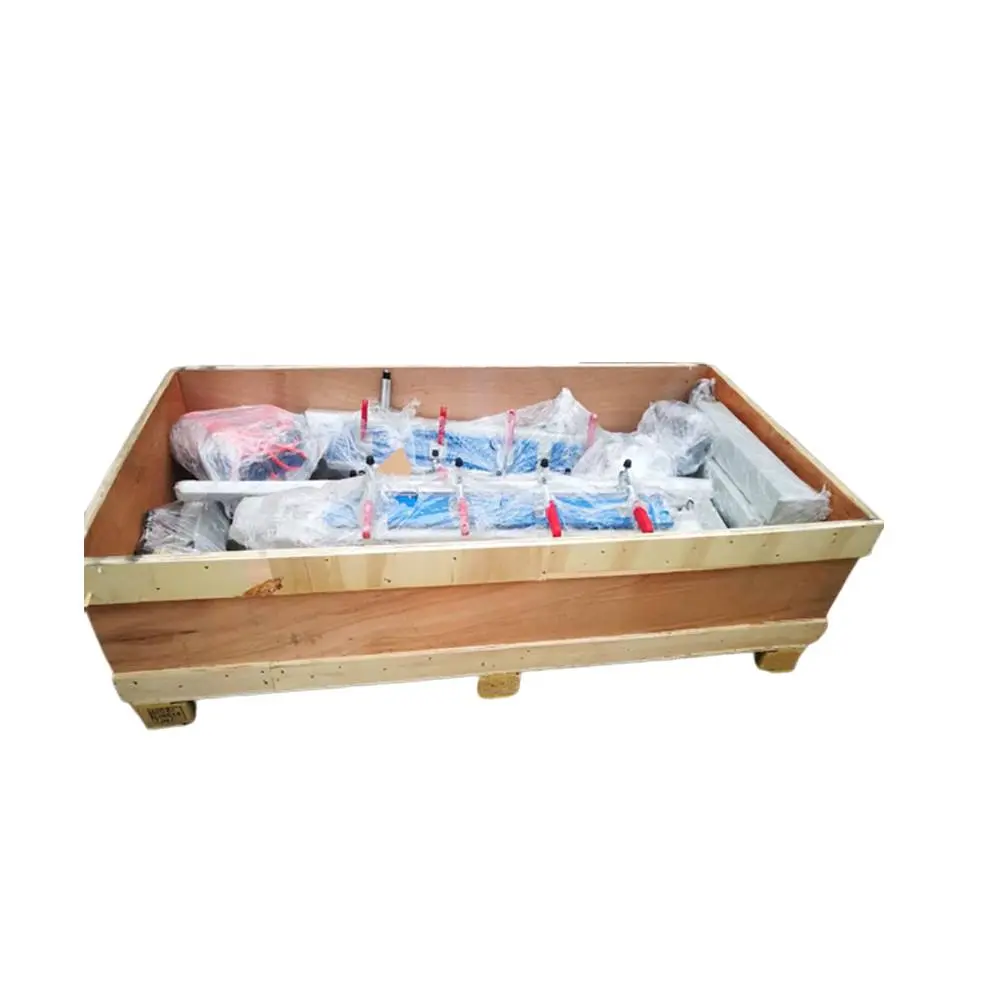
7. The machine is packed as a whole in a sturdy wooden case to support easy and safe transportation.
Environment Requirements
The plate-making process requires a carefully controlled environment. The plate-making workshop should be well sealed to prevent direct exposure to strong light. This helps keep out dust and prevents exposure or light leakage while PS plates are stored or during printing. Dust in the air can settle on the PS plate or adhere to the film through electrostatic attraction. Larger particles can affect how closely the PS plate and film fit together. After development, areas of the sun-exposed PS plate may appear blank, grainy, or dirty, affecting reproduction of the original screen-line density. A clean environment is therefore important for plate making, especially for color plate making.